Medical Weight Loss in Orange County: How to Choose a Program in 2026
A practical 2026 guide to medical weight loss in Orange County: treatment options, costs, coverage changes and how to choose a clinic.
Medical weight loss in Orange County means a weight-loss program run by a licensed clinician who can prescribe medication, order lab work and track your progress, rather than a diet plan you follow alone. This guide explains how these programs work in 2026, what the main medications cost, how California’s coverage changes affect you, and the questions to ask before you choose a clinic.
Key Takeaways
- A real medical weight loss program starts with a clinical consultation, labs and a written plan, not a prescription handed out on the first call.
- Brand-name GLP-1 drugs (Wegovy, Zepbound) are FDA-approved; compounded semaglutide and tirzepatide are not, and the FDA has narrowed when they can be compounded since the shortages ended.
- Medi-Cal stopped covering Wegovy, Zepbound and Saxenda for weight loss on January 1, 2026, so many Orange County patients now pay privately.
- Track body composition, not just the scale: losing fat while keeping muscle is the goal.
- Ask who actually sees you, how dose changes are decided and what the total monthly cost is before you sign up.
What “Medical Weight Loss” Actually Means
The phrase is used loosely in advertising, so it helps to define it. A medical weight loss program is supervised by a licensed prescriber, such as a physician, a nurse practitioner or a physician assistant, who assesses your health before recommending treatment. In practice that usually includes:
- A medical history and exam covering weight history, current medications, conditions such as diabetes, high blood pressure or sleep apnea, and any history of pancreatitis, gallbladder disease or thyroid cancer that would rule out certain drugs.
- Baseline lab work, commonly blood sugar (A1C), a lipid panel, kidney and liver function and thyroid markers.
- A treatment plan that may combine nutrition guidance, activity targets and, where appropriate, prescription medication.
- Scheduled follow-ups to adjust doses, manage side effects and measure progress.
What separates a medical program from a commercial diet is accountability to a clinician who can change the plan when something is not working, and who will stop a medication when the risks outweigh the benefits.
Who Is a Candidate?
The FDA-approved weight management medications are labeled for adults with a body mass index (BMI) of 30 or higher, or 27 or higher with at least one weight-related condition such as high blood pressure, type 2 diabetes or high cholesterol. Clinics generally use those thresholds as a starting point, then weigh your full medical picture.
You are usually not a good candidate for GLP-1 medication if you are pregnant or planning a pregnancy, have a personal or family history of medullary thyroid carcinoma or MEN 2 syndrome, or have had pancreatitis. A careful clinic will screen for these before writing any prescription. If a provider offers medication without asking about them, treat that as a warning sign.
The Main Treatment Options in 2026
Most Orange County programs build on the same core set of tools. The table below summarizes them.
| Option | How it works | Typical use | Key point |
|---|---|---|---|
| Semaglutide (Wegovy injection or Wegovy pill) | GLP-1 receptor agonist; reduces appetite and slows stomach emptying | Weekly injection or once-daily pill | FDA-approved for chronic weight management; the pill was approved in December 2025 |
| Tirzepatide (Zepbound) | Acts on both GIP and GLP-1 receptors | Weekly injection (pen or vial) | Produced the largest average weight loss of the approved drugs in its pivotal trial |
| Phentermine | Stimulant appetite suppressant | Daily tablet, usually short term | Inexpensive, but not suitable for people with heart disease or uncontrolled blood pressure |
| Compounded semaglutide or tirzepatide | Pharmacy-made versions of the active ingredients | Injection from a vial | Not FDA-approved; availability has narrowed since the shortages ended |
| Lifestyle program alone | Nutrition, activity and behavior coaching | Ongoing | Still the foundation of every plan, with or without medication |
The evidence behind the GLP-1 drugs is strong. In the STEP 1 trial, adults taking semaglutide 2.4 mg lost an average of 14.9% of their body weight over 68 weeks, compared with 2.4% on placebo (New England Journal of Medicine, 2021). In SURMOUNT-1, the highest dose of tirzepatide produced an average reduction of about 20.9% over 72 weeks (NEJM, 2022). Those are averages from controlled trials, so individual results vary widely, and weight tends to return when the medication is stopped without a maintenance plan.
Brand-Name vs. Compounded GLP-1s
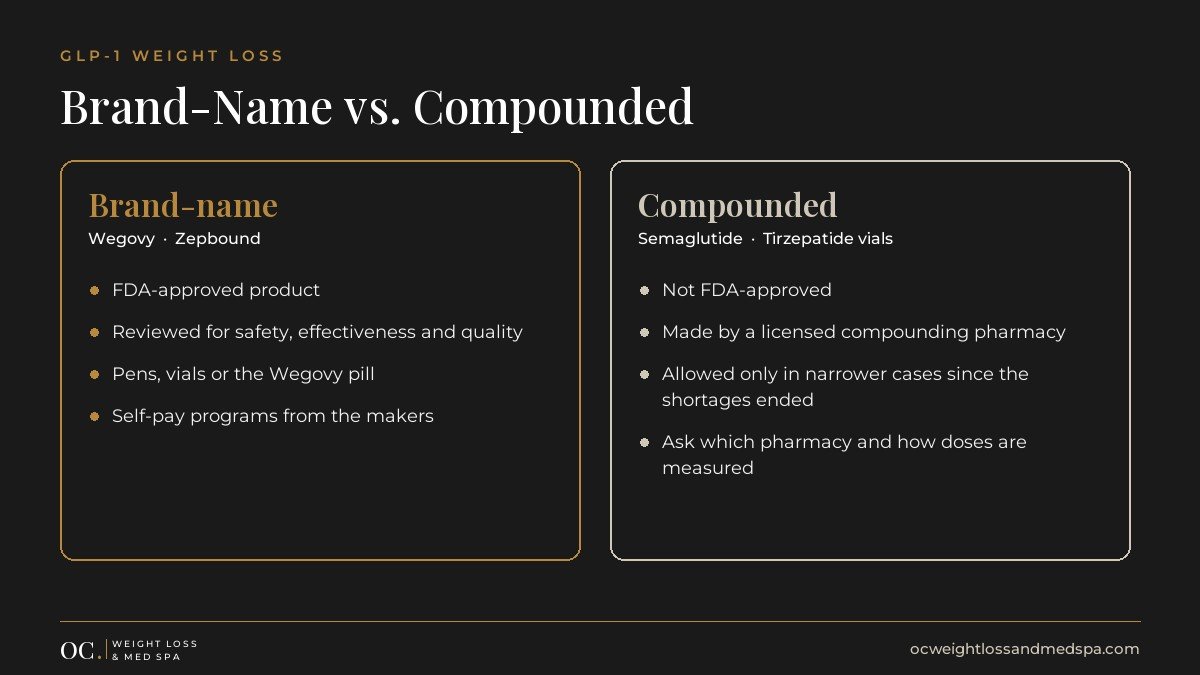
This is the question Orange County patients ask most, because the price gap can be large. The facts:
- Brand-name products (Wegovy, Zepbound) are FDA-approved, which means the agency reviewed their safety, effectiveness and manufacturing quality.
- Compounded versions are made by pharmacies and are not FDA-approved. During the 2022 to 2025 shortages, the FDA allowed wider compounding. It later determined that the tirzepatide shortage was resolved (final determination December 19, 2024) and the semaglutide shortage was resolved on February 21, 2025, and the grace periods for compounders have ended (FDA).
- Compounding is still possible in narrower situations, for example when a prescriber documents an individual clinical need. The rules continue to evolve, so ask your clinic how it sources compounded medication and which licensed pharmacy prepares it.
Whichever route you take, the medication should come from a licensed U.S. pharmacy, not an online seller offering “research” peptides. If you are offered a compounded product, ask for the pharmacy’s name and license and how the vial concentration is labeled, because dosing errors with vials and syringes are a known risk.
What Medical Weight Loss Costs in Orange County
Costs fall into three buckets: the program (visits, labs, monitoring), the medication, and any add-ons. Medication is usually the biggest line. Manufacturer self-pay prices as of October 2026:
| Medication | Self-pay channel | Listed price |
|---|---|---|
| Wegovy pill | NovoCare Pharmacy | From $149 a month (1.5 mg); higher doses cost more |
| Wegovy injection (0.25 to 2.4 mg) | NovoCare Pharmacy | $349 a month, with an introductory offer for new patients |
| Zepbound single-dose vials | LillyDirect | $299 (2.5 mg) to $449 a month (7.5 to 15 mg) when refilled on time |
Prices change often, so confirm on NovoCare or LillyDirect before you budget. Program fees vary by clinic; many do not publish them and give a written quote after the first consultation. Some offer financing through medical credit providers, which spreads the cost but adds interest if you miss the promotional terms.
Insurance and the Medi-Cal change
Commercial insurance coverage for weight-loss medication depends on your employer’s plan, and many plans exclude it. For Medi-Cal members the picture changed this year: as of January 1, 2026, Medi-Cal no longer covers Wegovy, Zepbound or Saxenda for weight loss, though limited exceptions remain for other approved uses such as cardiovascular risk reduction or sleep apnea, reviewed case by case (DHCS Medi-Cal Rx). If you were relying on Medi-Cal, talk to your prescriber about whether you qualify for an exception or whether a self-pay option fits your budget.
Why Body Composition Matters More Than the Scale
When you lose weight quickly, some of what you lose is muscle, not just fat. Muscle supports your metabolism, strength and blood sugar control, so losing too much of it works against you. That is why better programs measure body composition at the start and at regular check-ins instead of relying on the bathroom scale.
Common tools include bioelectrical impedance analyzers such as InBody, which estimate fat mass, lean mass and body water in a minute or two, and DEXA scans, which are more precise but less convenient. Whatever the tool, the goal is the same: confirm that most of the weight coming off is fat, and adjust protein intake and resistance training if lean mass is dropping too fast.
How to Choose a Clinic: 10 Questions to Ask
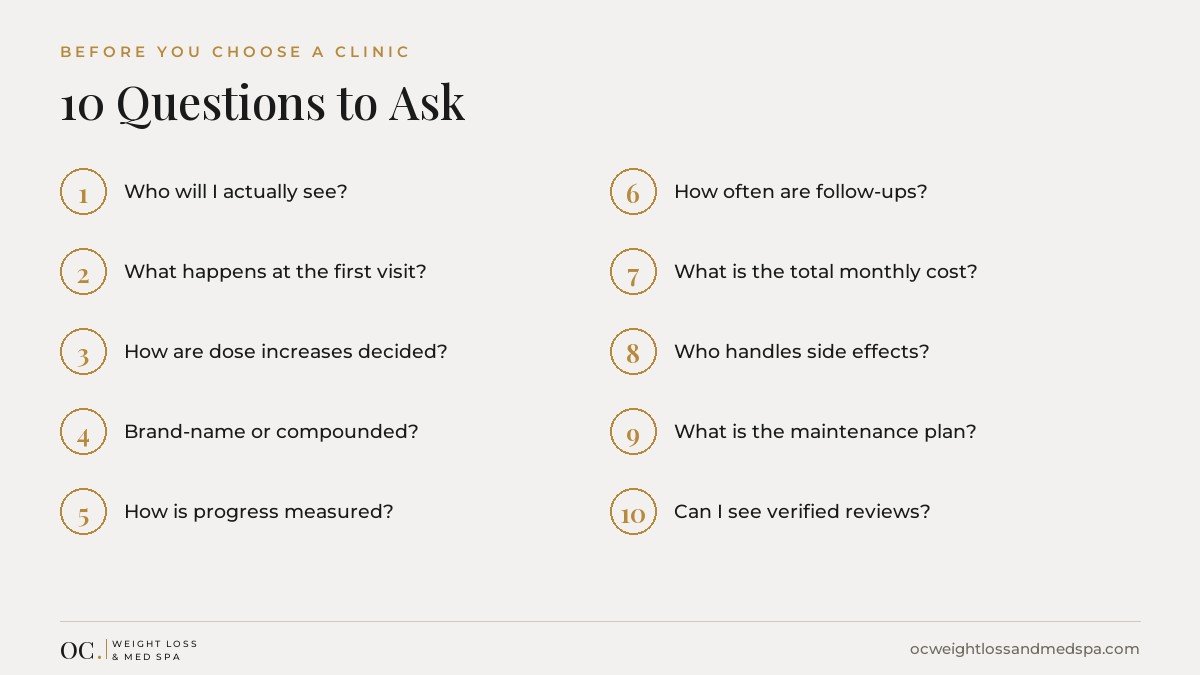
- Who will I actually see? Is it the same licensed prescriber at every visit, or a rotating team?
- What happens at the first visit? Expect a history, vital signs and an order for lab work before medication starts.
- How are dose increases decided? Doses should rise gradually based on your response and side effects, not on a fixed sales schedule.
- Brand-name or compounded? If compounded, which licensed pharmacy makes it?
- How is progress measured? Weight alone, or body composition too?
- How often are follow-ups, and can some be done by video?
- What is the total monthly cost, including visits, labs and medication, in writing?
- What is the plan for side effects such as nausea or constipation, and who answers questions between visits?
- What is the maintenance plan once you reach your goal?
- Can I see verified reviews on Google or Yelp, not just testimonials on the clinic’s own site?
Red flags
- Medication offered without labs or a real medical history.
- Guaranteed results (“lose 30 pounds in 30 days”).
- Prices that are far below the manufacturers’ own self-pay prices with no explanation of the source.
- Pressure to prepay for many months before you know how you tolerate the medication.
A Local Example: How One Mission Viejo Clinic Structures Its Program
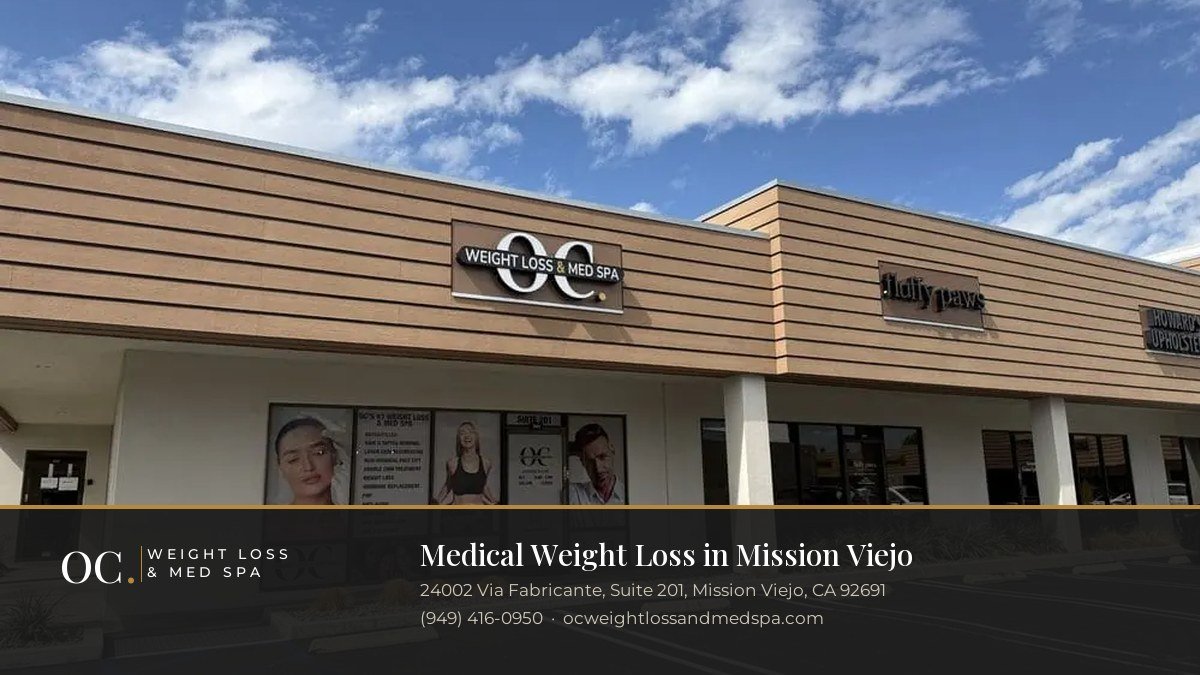
To show what the questions above look like in practice, here is how OC Weight Loss & Med Spa, a clinic at 24002 Via Fabricante in Mission Viejo, describes its medical weight loss program on its website:
- One clinician for every visit. Treatments are performed by Lindsay Short, NP-BC, a board-certified nurse practitioner, so patients see the same prescriber throughout.
- Free first consultation and InBody scan. The clinic records fat mass, lean mass and body water at the start and at follow-ups, which addresses the muscle-loss concern described above.
- Both medication routes. GLP-1 medication is offered as brand-name pens or as compounded vials, and the clinic states plainly that compounded semaglutide and tirzepatide are not FDA-approved. Phentermine and B12 injections are also available.
- Video consults across California. The first consultation can be done by video, with labs and medication pickup at the clinic.
- Written quotes. Prices are not published online; each patient receives a written quote at the consultation, and financing is offered through Cherry and CareCredit.
The clinic serves patients from across south Orange County, including Irvine, Laguna Niguel, Lake Forest, Aliso Viejo and San Juan Capistrano. If you are searching for medical weight loss Orange County providers, use the ten questions above with every clinic you speak to, including this one, and compare the written answers side by side.
What to Expect in the First 90 Days
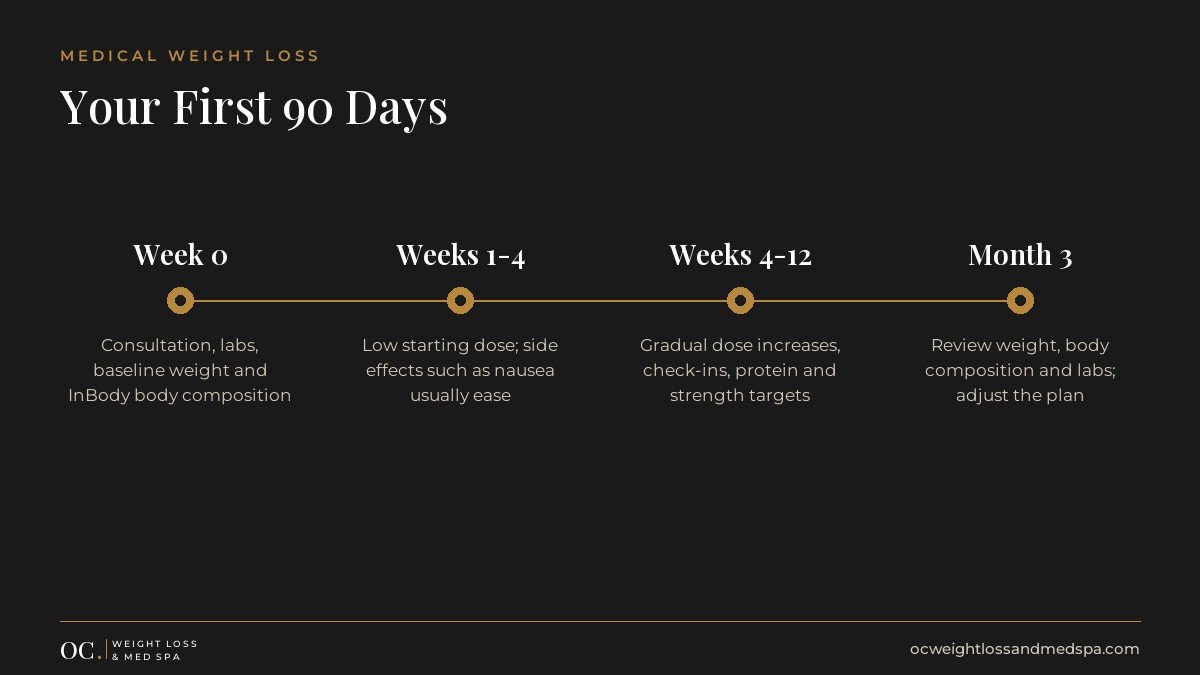
| Period | What usually happens |
|---|---|
| Week 0 | Consultation, medical history, labs ordered, baseline weight and body composition |
| Weeks 1 to 4 | Starting dose; most side effects (nausea, reduced appetite, constipation) appear here and often ease |
| Weeks 4 to 12 | Gradual dose increases if tolerated; check-ins every few weeks; protein and strength-training targets set |
| Around 3 months | Review of weight, body composition and labs; decide whether to continue, adjust or stop |
Progress in the first month is often modest because doses start low on purpose. Judging a program after two weeks is usually too early; judging it after three months with real data is fair.
Frequently Asked Questions
How much weight can I expect to lose with medical weight loss?
It depends on the treatment and on you. In clinical trials, average loss was about 15% of body weight on semaglutide 2.4 mg over 68 weeks and about 21% on the highest tirzepatide dose over 72 weeks, but many people lose less and some lose more. Your clinician should set a realistic target based on your history.
Is compounded semaglutide safe?
Compounded semaglutide is not FDA-approved, so it has not been through the agency’s review for safety, effectiveness and quality. Risk depends heavily on the pharmacy and on accurate dosing. If you use it, get it through a licensed prescriber and a licensed U.S. pharmacy, and ask exactly how to measure each dose.
Does insurance cover medical weight loss in California?
Some commercial plans cover weight-loss medication; many do not. Medi-Cal stopped covering Wegovy, Zepbound and Saxenda for weight loss on January 1, 2026, with limited exceptions. Many patients now use manufacturer self-pay programs or clinic financing.
Can I do a weight loss consultation online?
Yes. Many California clinics offer video consultations, though you will still need lab work and, in most cases, periodic in-person visits for measurements.
What happens when I stop taking a GLP-1 medication?
Appetite usually returns, and studies show many people regain a substantial part of the weight within a year if they stop without a plan. Ask your clinic how it handles tapering and long-term maintenance before you start.
Is a nurse practitioner qualified to run a weight loss program?
In California, nurse practitioners are licensed to assess patients and prescribe medications, including GLP-1 drugs, within their scope of practice. What matters most is the clinician’s training, the program’s monitoring and whether you see the same prescriber consistently.
Making the Decision
The best medical weight loss program in Orange County is the one that treats you as a patient first: a proper consultation, honest information about brand-name versus compounded medication, a clear written cost, body composition tracking and a plan for life after the weight comes off. Use the questions in this guide, compare at least two clinics, and do not start any medication until you understand how it will be monitored.
This article is for general information and is not medical advice. Talk to a licensed healthcare provider about whether any weight loss treatment is right for you. Prices and coverage rules change; check the official sources linked above.