Real vs Artificial Christmas Tree 2026: Cost, Environment and Safety
Should you buy a real or artificial Christmas tree this year? Compare cost, environmental impact and fire safety, then get buying, care and timing tips for 2026.
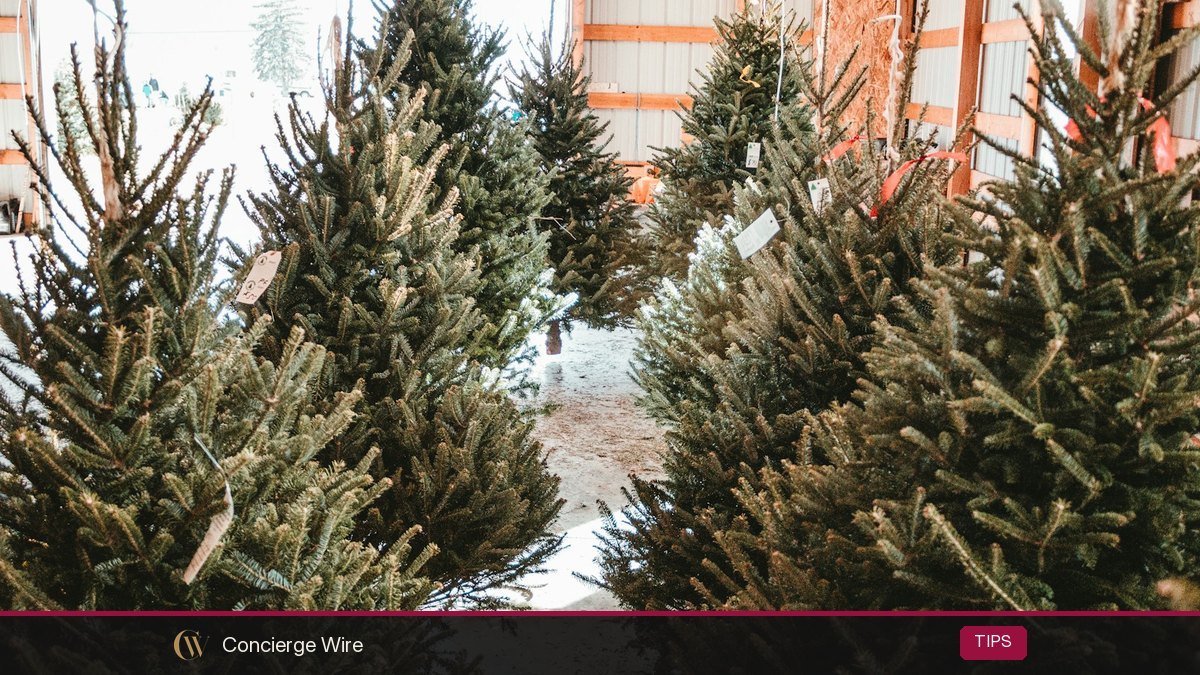
A real Christmas tree costs less up front each year and is the lower-impact choice if you buy locally and recycle it, while an artificial tree saves money and effort only if you keep it for many seasons. For safety, the tree type matters less than how you treat it: water a real tree daily, buy an artificial one labeled fire resistant, and keep either at least three feet from heat sources. This 2026 guide compares cost, environment and safety, then covers buying, care and the best time to buy. Updated October 2026.
Key Takeaways
- Cost: an artificial tree usually pays for itself only after several years of use, compared with buying a real tree each December.
- Environment: an industry-commissioned life cycle study put the break-even point at about 4.7 years, meaning you would need to keep an artificial tree about five years or more to match buying a real tree annually.
- Safety: NFPA reports US fire departments responded to an average of 160 home fires a year that started with Christmas trees (2016 to 2020). A heat source too close to the tree causes about one in four of them.
- Real tree care: fresh cut on the trunk, water every day, three feet from heat, and out of the house once it dries.
- Timing: Thanksgiving is November 26, 2026; many lots open around that weekend. Artificial trees are often cheapest in post-Christmas clearance sales.
Quick answer: real vs. artificial at a glance
| Factor | Real tree | Artificial tree |
|---|---|---|
| Up-front cost | Lower each year, but you pay every year | Higher once, then little or nothing for years |
| Long-term cost | Adds up over 5 to 10 years | Usually cheaper if kept many seasons |
| Environmental impact | Grown as a crop; can be chipped or composted after | Plastic (PVC) and metal, energy-intensive to make; better the longer you keep it |
| Fire risk | Rises as the tree dries out | Lower if labeled fire resistant, but lights and heat sources still matter |
| Effort | Buying trip, daily watering, disposal | Assembly and storage space |
| Allergies and mess | Needles, sap, possible pollen and mold sensitivity | Dust from storage; no needles |
| Scent and tradition | Real pine and fir fragrance; farm visit | None unless you add it |
Cost comparison: which is cheaper over time?
Prices vary a lot by region, height and species, and artificial tree prices have been affected by tariffs on imported goods, so get local quotes. The math is what matters. Here is an illustrative comparison using round numbers you can swap for your own:
| Years | Real tree at $90 a year (plus $10 stand and disposal costs averaged) | Artificial tree at $300 once (plus $20 storage bag) |
|---|---|---|
| 1 | $100 | $320 |
| 3 | $300 | $320 |
| 5 | $500 | $320 |
| 10 | $1,000 | $320 (if it lasts that long) |
With these numbers the artificial tree breaks even early in year four. A cheap artificial tree that sheds or loses its lights in three seasons never pays off, while a quality one used for a decade clearly does. A pre-lit tree is convenient, but if the built-in lights fail, fixing them can be difficult, so factor that in.
Ways to cut the cost of a real tree
- Cut your own on public land. Many national forests and Bureau of Land Management offices sell personal-use tree permits. Prices are set by each forest; for 2025, for example, permits in southern Oregon were $5 per tree, while some forests charge more. Permits are sold through Recreation.gov (which adds a processing fee) and at local offices. Each forest sets its own season dates and rules.
- Fourth graders: in 2025, fourth graders with a valid Every Kid Outdoors pass could get a free Forest Service tree permit. Check whether the offer continues for the 2026 season on your forest’s page.
- Choose a shorter tree. Price usually rises steeply with height.
- Buy from a farm rather than a big-city lot, where transport and rent are built into the price.
Environmental impact: what the research says
This debate has no single right answer, because the result depends on how long you keep an artificial tree and how you dispose of a real one.
- Real trees are grown on farms as a crop, often over several years, and new trees are planted to replace those harvested. After the holidays, they can be chipped into mulch or composted, which returns carbon and organic matter to the soil.
- Artificial trees are made mostly from PVC plastic and metal, and most are manufactured in China. Manufacturing is the biggest energy cost in their life cycle, and they generally are not recyclable at the end.
A Michigan State University forestry professor, writing in MSU Today, summarized a life cycle assessment commissioned by the American Christmas Tree Association (an artificial-tree industry group). It estimated an environmental break-even point of 4.7 years: you would need to keep an artificial tree about five years to offset buying a real tree every year. He noted the analysis did not count carbon stored by tree roots left in the soil, and that a long drive to buy a real tree can also change the result. His advice: if you own an artificial tree, keep using it as long as possible; if you buy real, recycle or compost it rather than landfilling it.
Bottom line: a real tree bought close to home and recycled is a low-impact choice. An artificial tree is a reasonable choice if you will keep it for many years. Throwing out an artificial tree after two or three seasons is the worst option.
Christmas tree fire safety
Tree fires are not common, but they can be serious and spread very fast. The National Fire Protection Association’s winter holiday safety page reports:
- Between 2016 and 2020, US fire departments responded to an average of 160 home fires per year that started with Christmas trees.
- Electrical distribution or lighting equipment was involved in more than two in five home Christmas tree fires, and nearly one in five were started by lamps or bulbs.
- Thirty percent of Christmas tree fires were in January, as trees dry out after the holidays.
Different NFPA and government fact sheets cite slightly different shares for electrical causes because they cover different years, but the message is consistent: lights, dry trees and nearby heat cause most of the problems. NFPA’s tree safety tip sheet adds that a heat source too close to the tree causes about one in every four of these fires.
| Safety rule | Real tree | Artificial tree |
|---|---|---|
| Keep at least 3 feet from fireplaces, radiators, candles, heat vents and lights | Yes | Yes |
| Do not block an exit | Yes | Yes |
| Water daily | Yes | Not applicable |
| Use lights listed by a qualified testing lab; replace frayed or damaged strings | Yes | Yes |
| Follow the maker’s limit on connected strands | Yes | Yes |
| Look for a “fire resistant” label | Not applicable | Yes, per CPSC |
| Turn off lights when you go to bed or leave home | Yes | Yes |
| Remove once dry or after the holidays | Yes | Not applicable |
The U.S. Consumer Product Safety Commission’s holiday safety center also advises never stringing together more than three sets of incandescent lights and not overloading outlets. LED strings run cooler and use less power.
Buying tips: real and artificial
How to choose a fresh real tree
- Check the needles. They should be green and flexible and should not fall off when touched. NFPA’s tip sheet uses this as its main freshness test.
- Do a gentle shake or bounce. A few brown inner needles dropping is normal; a shower of green needles is not.
- Look at the trunk. It should be sticky with sap, not dry and cracked.
- Measure first. Know your ceiling height and subtract the stand and topper, usually around a foot. Measure the floor space too.
- Pick a species for your needs. Firs (such as Fraser, noble and balsam) tend to hold needles well and have stiff branches for heavy ornaments. Pines have long, soft needles. Spruces have sharp needles and good shape but can drop needles sooner in a warm room.
How to choose an artificial tree
- Look for the “fire resistant” label, as CPSC advises.
- Tip count and branch type determine fullness. Molded “PE” tips look more realistic than flat “PVC” tips; many trees mix both.
- Pre-lit or unlit? Pre-lit saves time each year. Choose one where a single failed bulb does not kill the whole section, and prefer LED.
- Check the warranty, especially on the lights.
- Plan storage. A storage bag or box keeps dust and pests out and helps it last the years that make it worthwhile.
Real tree care: make it last to Christmas
- Fresh cut. Cut a disk off the base of the trunk just before putting the tree in the stand. NFPA’s tip sheet says to cut 2 inches; many tree-care guides say about a half inch is enough. Either way, the point is to open fresh wood so it can take up water.
- Water right away and every day. A fresh tree can drink a lot in its first days. Washington State University’s Christmas tree specialist recommends a stand that holds about one quart of water per inch of trunk diameter, so a 4-inch trunk needs at least a gallon. Never let the water drop below the cut.
- Plain water is fine. You do not need additives.
- Keep the room cool and the tree out of direct sun and away from heat vents to slow drying.
- Check dryness weekly. If needles break instead of bend, or drop heavily, take the tree down.
When to buy a Christmas tree in 2026
| Tree | Best time | Why |
|---|---|---|
| Real, from a lot or farm | Thanksgiving weekend (Nov 26 to 29, 2026) through mid-December | Best selection early; with daily watering, a fresh tree bought in late November or early December usually lasts through Christmas |
| Real, cut-your-own on public land | When your forest’s permit season opens, often November | Permits and season dates vary by forest; buy in advance |
| Artificial, full price | Early November | Best selection of sizes and styles |
| Artificial, best price | After December 25 | Retailers commonly clear holiday stock, so buy for next year |
Christmas Day 2026 falls on a Friday. If you want a real tree to stay fresh through New Year’s, buy closer to the first or second week of December, or simply commit to daily watering.
After the holidays: disposal
- Real trees: NFPA says to get rid of the tree after Christmas or when it is dry, and not to leave it in the home, the garage or against the house. Many cities run curbside collection or drop-off chipping in January. Remove all lights, tinsel, ornaments and the stand first.
- Artificial trees: keep them in use as long as possible. If yours is still in good shape but you want a change, donate it rather than trashing it.
- Lights: bring outdoor lights inside after the season so they last longer.
Frequently Asked Questions
Is a real or fake Christmas tree better for the environment?
It depends on how long you keep a fake tree. An industry-commissioned study put the break-even at about 4.7 years. Buy real and recycle it, or buy artificial and keep it for many years. Short-lived artificial trees are the worst choice.
Are real Christmas trees a fire hazard?
A well-watered fresh tree is hard to ignite. The danger comes when it dries out. NFPA notes 30% of Christmas tree fires happen in January. Water daily, keep it three feet from heat, and remove it once it is dry.
How long does a real Christmas tree last indoors?
It depends on freshness when you buy it, the species, the room temperature and, above all, watering. A fresh tree that never runs dry will usually last through the holidays if bought in late November or early December.
How many years should an artificial tree last?
A quality tree stored carefully can last many years. To make it worthwhile environmentally, aim for at least five, and ideally ten or more.
Can I cut my own Christmas tree in a national forest?
Yes, in many national forests and on some BLM land, with a permit. Prices, limits and season dates are set locally, and permits are sold through Recreation.gov and local offices.
Do I need to add anything to my tree’s water?
No. Plain tap water is enough. What matters is never letting the water level fall below the base of the trunk.
Choosing the tree that fits your home
If you love the scent and the outing, a real tree from a nearby farm, recycled in January, is a fine choice. If you want convenience and will keep it for a decade, a quality artificial tree makes sense. Whichever you choose, the habits that keep your family safe are the same: three feet from heat, tested lights switched off at night, and a tree that comes down before it turns into kindling.