Best Fall Foliage Road Trips in the USA (With Peak Timing by Region)
Eleven classic leaf-peeping drives across the US, when each one usually peaks, and the practical tips that make a foliage trip work.
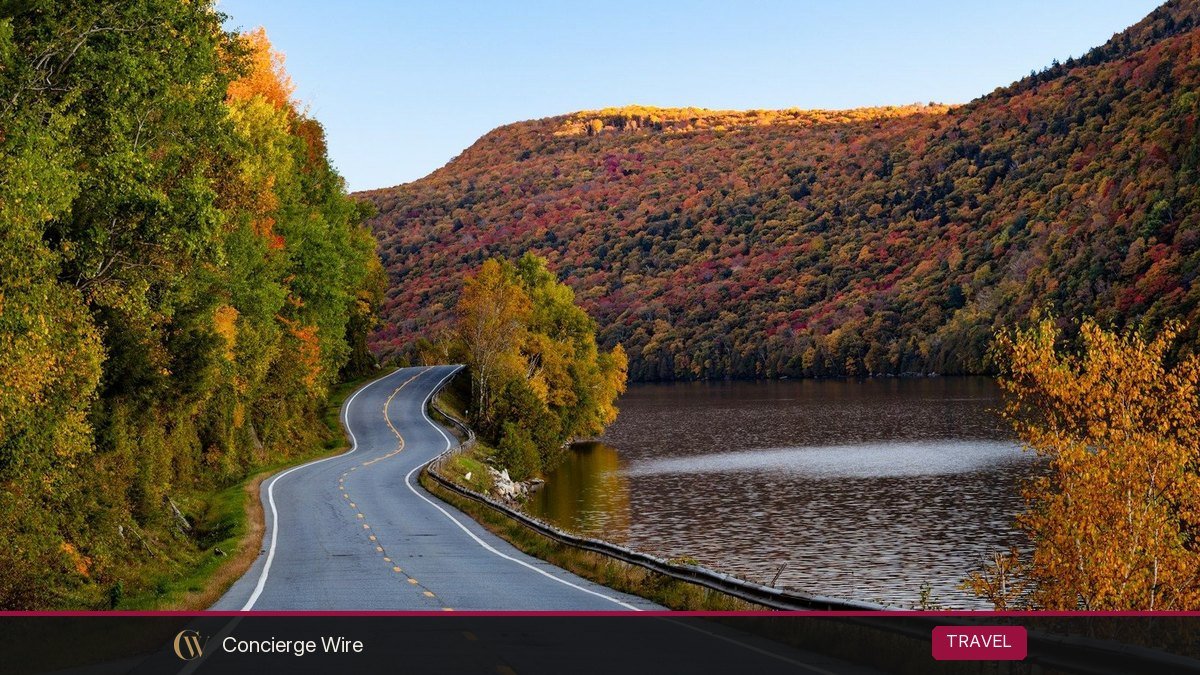
The best fall foliage road trips in the USA follow the color south and downhill: northern New England and Michigan’s Upper Peninsula peak first, the central Appalachians follow in mid-October, and the southern mountains and Ozarks finish the season into early November. Below are 11 proven drives, when each one typically peaks, how long they take, and the practical details that make or break a leaf-peeping weekend.
Key Takeaways
- Peak color moves roughly north to south and high to low: late September in northern New England and the Upper Peninsula, mid-October in the central Appalachians, late October to early November in the Smokies and Ozarks.
- Elevation matters as much as latitude. On the Blue Ridge Parkway, higher sections peak weeks before valley towns like Asheville.
- Some Blue Ridge Parkway sections in North Carolina are still closed for Hurricane Helene repairs in fall 2026, so check the official road status page before you go.
- Drive midweek and start early. Weekend traffic on famous routes like the Kancamagus Highway and Skyline Drive can double your travel time.
- Peak dates are estimates, not promises. Weather in September and October can shift color by a week or more.
How Fall Color Timing Works (and Why Predictions Miss)
Leaves change when shorter days and cooler nights shut down chlorophyll production, revealing yellow and orange pigments already in the leaf and triggering the reds in species like sugar maple and sumac. Day length is fixed by the calendar, which is why peak foliage lands in roughly the same window each year. Weather is what nudges it earlier or later.
Three patterns are worth knowing:
- Sunny days and cool (not freezing) nights produce the brightest reds.
- A warm, dry late summer can delay color and make it duller, with leaves turning brown and dropping early.
- A hard freeze or a big windstorm can end peak color in a single night.
That is why you should treat any peak date as a range. The Old Farmer’s Almanac fall foliage map is a good planning tool, and most leaf-peeping states publish weekly color reports once the season starts. Check both a few days before you drive.
Peak Fall Foliage by Region: Quick Reference
Use this table to match a route to your travel dates. Lengths are approximate one-way driving distances for the scenic section.
| Route | State(s) | Scenic length | Typical peak window |
|---|---|---|---|
| Kancamagus Highway (NH-112) | New Hampshire | About 34.5 miles | Late September to mid-October |
| Vermont Route 100 | Vermont | About 200+ miles (drive a section) | Late September to mid-October |
| Park Loop Road, Acadia | Maine | About 27 miles | Mid to late October |
| Tunnel of Trees (M-119) | Michigan | About 20 miles | Early to mid-October |
| Upper Peninsula loops | Michigan | Varies | Late September to early October |
| Great River Road (upper Mississippi) | Minnesota, Wisconsin, Iowa | Drive a 100–150 mile section | Early to mid-October |
| Skyline Drive | Virginia | 105 miles | Mid to late October |
| Blue Ridge Parkway | Virginia, North Carolina | 469 miles (drive a section) | Mid-October high; late October to early November low |
| Newfound Gap Road, Great Smoky Mountains | Tennessee, North Carolina | About 33 miles | Mid-October high; late October into November low |
| Talimena Scenic Drive | Oklahoma, Arkansas | 54 miles | Late October to early November |
| Colorado aspen routes | Colorado | Varies | Mid-September to early October |
New England Fall Foliage Road Trips
New England sets the standard for fall color because of its dense sugar maple forests, which turn the brilliant orange and scarlet most people picture. The region is also compact, so you can link two or three drives in a long weekend.
1. Kancamagus Highway, New Hampshire
The “Kanc” runs about 34.5 miles through the White Mountain National Forest between Lincoln and Conway, climbing to more than 2,800 feet at Kancamagus Pass. There are no gas stations, restaurants or hotels along the route itself, so fill up in Lincoln or Conway first. Stop at Sabbaday Falls (a short, easy walk), the Lower Falls picnic area and the Pemigewasset Overlook. On peak October weekends traffic can crawl, so start before 8 a.m. The Kancamagus Scenic Byway site covers parking passes and stops.
2. Vermont Route 100
Route 100 runs roughly the length of Vermont, and you do not need to drive all of it. The central stretch between Killington, Stowe and Waterbury is the classic section, passing farms, covered bridges and village greens. Build in stops at Moss Glen Falls near Granville and Smugglers’ Notch (Route 108 north of Stowe, which is narrow and closes in winter). Northern Vermont often peaks a week or so before the southern part of the state.
3. Acadia National Park, Maine
Coastal Maine peaks later than inland New England, usually mid to late October, which makes Acadia a good choice if you miss the mountain peak. The 27-mile Park Loop Road passes Sand Beach, Thunder Hole and Jordan Pond, and the Cadillac Summit Road climbs to one of the best views on the East Coast. Vehicle reservations have been required for the Cadillac summit road during busy months, so check the park’s current rules before you go.
Midwest Fall Foliage Road Trips
The Midwest gets less attention than New England, but it offers lake views, fewer crowds and lower hotel rates.
4. Tunnel of Trees (M-119), Michigan
This narrow, winding road runs about 20 miles along the Lake Michigan shoreline between Harbor Springs and Cross Village. Hardwoods close in overhead to form the “tunnel.” There is no center line for much of the route and a lot of curves, so it is a slow drive by design. Stop in the tiny town of Good Hart and finish with a meal at Cross Village. Peak color here usually comes in early to mid-October, slightly later than the Upper Peninsula.
5. Michigan’s Upper Peninsula
The UP is one of the first places in the lower 48 to peak, usually in late September to early October. Good routes include the drive to Tahquamenon Falls, the stretch along Lake Superior near Pictured Rocks, and Brockway Mountain Drive near Copper Harbor at the tip of the Keweenaw Peninsula. Distances are long and services thin, so plan fuel stops.
6. Great River Road, Upper Mississippi
The Great River Road follows the Mississippi River through ten states. For foliage, the bluff country of southeastern Minnesota, western Wisconsin and northeastern Iowa is the sweet spot, with limestone bluffs, river towns and eagle overlooks. Pick a 100 to 150 mile stretch, such as Red Wing to La Crosse, and give it a full day.
Appalachian and Southern Fall Foliage Road Trips
The southern Appalachians have one of the most diverse hardwood forests in the country, which means a long color season with layers of red, orange, yellow and purple. Elevation changes are dramatic, so color can peak on the ridgetops while the valleys are still green.
7. Skyline Drive, Virginia
Skyline Drive runs 105 miles along the crest of Shenandoah National Park with 70-plus overlooks. The speed limit is 35 mph, so plan at least three to four hours for the full drive without stops, and more like a full day with hikes. Short walks such as Dark Hollow Falls or Stony Man give you big views for modest effort. Note that October 27 is a national park fee-free day for US citizens and residents in 2026, which also means bigger crowds.
8. Blue Ridge Parkway, Virginia and North Carolina
The Blue Ridge Parkway is 469 miles long, connecting Shenandoah to the Great Smoky Mountains. Higher elevations, above about 3,000 to 5,000 feet, typically color up from mid to late October, while lower areas around Asheville often peak from late October into early November. Drive the section from Blowing Rock toward Linville Falls and Grandfather Mountain for some of the best scenery.
One important 2026 note: parts of the parkway in North Carolina are still being repaired after Hurricane Helene. The National Park Service has said it aims to reopen all Helene-closed sections by the end of 2026, but some stretches south of Linville Falls were still closed in September. Check the official Blue Ridge Parkway road status page the day before you drive.
9. Newfound Gap Road, Great Smoky Mountains
This road crosses Great Smoky Mountains National Park between Gatlinburg, Tennessee, and Cherokee, North Carolina, topping out near 5,000 feet at Newfound Gap. The high country colors first, around mid-October, and the lower slopes and areas like Cades Cove hold color into late October and early November. The park does not charge an entrance fee, but it does require a paid parking tag for vehicles parked more than 15 minutes. Gatlinburg traffic is heavy on October weekends, so enter from the Cherokee side or go early.
10. Talimena Scenic Drive, Oklahoma and Arkansas
The Talimena runs 54 miles along the ridges of the Ouachita Mountains between Talihina, Oklahoma, and Mena, Arkansas. It is one of the latest-peaking drives on this list, usually late October into early November, which makes it a good backup when the northern routes are done. Overlooks are frequent and crowds are small compared with the East. See the Talimena Scenic Drive Association for current conditions.
Western Fall Color: Colorado Aspens
11. Colorado’s aspen country
Colorado’s golden aspens are a different experience: whole mountainsides turn yellow at once. Peak is early, typically mid-September to early October, with higher elevations changing first. Famous spots include Maroon Bells near Aspen (which uses a reservation and shuttle system in peak season), the Million Dollar Highway between Ouray and Silverton, and the Peak to Peak Highway west of Boulder. If you are reading this in late September, lower-elevation aspen groves may still be worth a trip; otherwise, mark it for next year and aim for the third week of September.
How to Plan a Fall Foliage Road Trip
The difference between a great leaf-peeping trip and a frustrating one is usually logistics, not luck.
- Pick a region, then a route. Choose based on when you can travel. If your only free weekend is the last one in October, look south and low (Smokies, Blue Ridge valleys, Talimena), not at Vermont.
- Book lodging early and stay flexible. Inns in New England and Blue Ridge towns sell out on peak weekends. Refundable bookings let you move a week if the color is running late.
- Drive midweek if you can. A Tuesday on the Kancamagus is a different road from a Saturday.
- Start at sunrise. Morning light is softer, fog in the valleys is photogenic, and parking lots at popular overlooks are empty.
- Check road status the night before. Scenic roads close for rockslides, repairs, weather or early snow at high elevations.
- Carry offline maps. Cell coverage drops out in the mountains. Download maps and have a paper backup.
- Fill the tank before you start. Many scenic byways have no services at all.
What to Pack for Leaf Peeping
Fall weather swings hard, especially in the mountains. A 60-degree afternoon can follow a frosty morning, and summit overlooks are often 10 to 15 degrees colder than the valley.
- Layers: a warm fleece, a rain shell and a hat
- Comfortable shoes for short trails and wet overlooks
- Water and snacks, since many routes have no food stops
- A phone mount and car charger for navigation
- A polarizing filter or polarized sunglasses, which cut glare on leaves and water and make colors look richer
- Cash for small-town farm stands and parking fees
Frequently Asked Questions
When is peak fall foliage in the USA?
Peak foliage runs from mid-September in Colorado’s high country to early November in the southern Appalachians and Ozarks. Most of New England peaks between late September and mid-October, and the Smokies generally peak from mid-October at high elevations to late October and early November lower down.
Which fall foliage drive is best for a first-timer?
The Kancamagus Highway in New Hampshire is a strong choice: it is short enough for a half day, has easy stops like Sabbaday Falls, and sits in a region with plenty of lodging. If you live in the South or Mid-Atlantic, Skyline Drive in Virginia is the more practical pick.
Is the Blue Ridge Parkway fully open for fall 2026?
Not entirely. Some North Carolina sections were still closed for Hurricane Helene repairs in September 2026, with the National Park Service aiming to reopen all of them by the end of the year. Check the official NPS road status page right before your trip.
How do I know if the leaves have peaked?
Check state tourism foliage reports, which are usually updated weekly during the season, and look at recent photos posted by local parks or visitor bureaus. If reports say “near peak” in the area you plan to visit, go within the week.
Are weekends or weekdays better for fall foliage trips?
Weekdays, whenever possible. Popular routes see heavy weekend traffic in October, especially on Saturdays. Midweek you will find easier parking, lower hotel rates and quieter overlooks.
What if I miss peak color?
Head south or downhill. Because color moves from north to south and from high to low elevations, you can usually find peak or near-peak color a few hours’ drive away for several weeks after your first choice has faded.
Plan Now, Adjust Later
The best fall foliage road trip is the one that matches your calendar. Choose a region whose typical peak lines up with your free dates, book refundable lodging, and watch the weekly color reports as your trip gets close. If the leaves run early or late, shift a few hours north or south. With the season moving down the map from September to November, there is almost always somewhere in the country at peak.