Daylight Saving Time Ends Nov. 1, 2026: What Changes and How to Adjust
Clocks fall back on Sunday, November 1, 2026. Here is what changes, which states don't switch, and a simple sleep plan for adults, kids and babies.
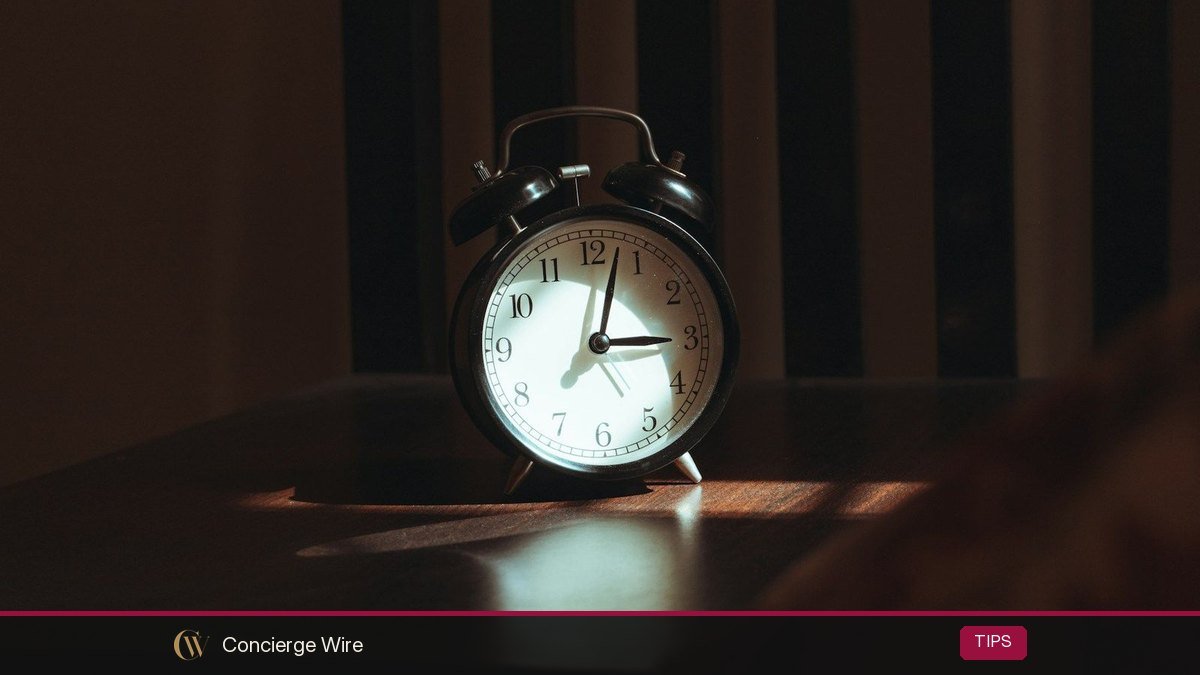
Daylight saving time ends on Sunday, November 1, 2026, at 2:00 a.m. local time, when clocks fall back one hour to 1:00 a.m. This guide covers exactly what changes that weekend, which states and territories skip the switch, where the push for permanent daylight saving time stands, and a practical plan to help adults, kids and babies adjust without a rough week.
Key Takeaways
- Clocks go back one hour at 2:00 a.m. on Sunday, November 1, 2026. Most phones and computers update automatically.
- Hawaii, most of Arizona, and several U.S. territories do not observe daylight saving time, so their clocks do not change.
- The House passed the Sunshine Protection Act in July 2026, but it still needs Senate approval, so the November change happens as usual.
- Adults can bank an extra hour of sleep; young children usually need a gradual shift over several days.
- Daylight saving time returns on Sunday, March 14, 2027.
When Does Daylight Saving Time End in 2026?
Under the rules set by the Energy Policy Act of 2005, daylight saving time in the United States ends at 2:00 a.m. on the first Sunday in November. In 2026, that is Sunday, November 1. At 2:00 a.m., local clocks go back to 1:00 a.m., so the hour from 1:00 to 2:00 a.m. happens twice that night.
The National Institute of Standards and Technology (NIST) publishes the official schedule and notes that time zones and daylight saving time are regulated by the U.S. Department of Transportation. The next spring change, when clocks move forward again, is 2:00 a.m. on the second Sunday of March, which is March 14, 2027.
| Event | Date | What happens |
|---|---|---|
| Daylight saving time ends | Sunday, November 1, 2026 | 2:00 a.m. becomes 1:00 a.m. (“fall back”) |
| Standard time in effect | November 1, 2026 to March 14, 2027 | Earlier sunrise and earlier sunset by the clock |
| Daylight saving time begins | Sunday, March 14, 2027 | 2:00 a.m. becomes 3:00 a.m. (“spring forward”) |
What Actually Changes for You
The switch itself is simple, but it touches more of your week than you might expect.
Mornings get lighter, evenings get darker
After the change, sunrise and sunset both arrive about an hour earlier by the clock. For many people that means a brighter commute in the morning and a dark drive home. In northern states, it can feel like the sun is gone by the time the workday ends.
You get one extra hour on Saturday night
The night of October 31 into November 1 is 25 hours long. Since that is Halloween night, families may find that late trick-or-treating and the time change blend into one long weekend. Plan the Sunday morning accordingly.
Some devices will not update themselves
Smartphones, computers, smart speakers and most cable boxes adjust automatically. These usually need a manual change:
- Car dashboard clocks (some newer models update via GPS, many do not)
- Microwaves and ovens
- Analog wall clocks and wristwatches
- Older alarm clocks and thermostats
- Coffee makers, sprinkler timers and outdoor light timers
- Security cameras and doorbells on older firmware (check timestamps)
Timers matter more than most people think. Porch lights, holiday displays and sprinkler systems running on the old schedule can be an hour off for weeks if nobody notices.
Work schedules and overnight shifts
If you work an overnight shift on October 31, you may work an extra hour. Pay rules for that hour depend on your employer and state law, so check with HR if you are unsure. Small-business owners with hourly night staff should confirm how their payroll system records the repeated hour.
Which States Don’t Observe Daylight Saving Time?
According to NIST, daylight saving time is not observed in Hawaii, American Samoa, Guam, Puerto Rico, the U.S. Virgin Islands, and the state of Arizona, with the exception of the Navajo Nation, which does observe it.
That creates a few oddities worth knowing:
- Arizona stays on Mountain Standard Time all year. In summer, Phoenix matches Los Angeles; in winter, it matches Denver.
- The Navajo Nation, which spans parts of Arizona, New Mexico and Utah, does change its clocks. The Hopi Reservation, which is surrounded by the Navajo Nation, does not. Driving through northeastern Arizona can mean crossing time “zones” several times.
- Hawaii stays on Hawaii-Aleutian Standard Time. After November 1, the time difference between Honolulu and the mainland shrinks by one hour.
If you schedule calls with people in these places, double-check meeting times in the week after the change. Calendar apps handle it, but manually typed times in emails often do not.
Is Daylight Saving Time Becoming Permanent?
Not yet. In mid-July 2026, the House of Representatives passed the Sunshine Protection Act by a vote of 308 to 117, according to NBC News. The bill would make daylight saving time the permanent standard, ending the twice-a-year switch. It still has to pass the Senate and be signed into law, and Senate leaders have signaled the outcome is uncertain. Until that happens, the November 1 change goes ahead as normal.
A few context points help make sense of the debate:
- The Senate passed a version by unanimous consent in 2022, but it stalled in the House.
- NBC reports that 19 states have already passed laws to adopt year-round daylight saving time if Congress allows it.
- Federal law currently lets states opt out of daylight saving time (as Arizona and Hawaii do) but not adopt it year-round on their own.
- Sleep physicians generally take the opposite view. The American Academy of Sleep Medicine has said current evidence best supports permanent standard time, and the American Medical Association has backed that position, arguing standard time lines up better with the body’s natural clock.
Laws can move quickly once they have momentum, so if you are reading this later in the season, check the latest news before planning around it.
How the Fall Change Affects Sleep
The fall change is usually easier than the spring one because you gain an hour instead of losing one. Many adults barely notice. But some people do: early risers find themselves wide awake at 4:30 a.m., and young children, who cannot read clocks and do not care what time it says, often wake an hour “early” for a week or more.
The underlying issue is the same for everyone. Your internal clock runs on light and routine, and it does not jump an hour overnight. It shifts gradually, usually over several days. The goal is to help it along rather than fight it.
For reference, here is how much sleep the CDC recommends by age:
| Age group | Recommended sleep per 24 hours |
|---|---|
| Infants (4 to 12 months) | 12 to 16 hours, including naps |
| Toddlers (1 to 2 years) | 11 to 14 hours, including naps |
| Preschoolers (3 to 5 years) | 10 to 13 hours, including naps |
| School-age kids (6 to 12 years) | 9 to 12 hours |
| Teens (13 to 17 years) | 8 to 10 hours |
| Adults (18 to 60 years) | 7 or more hours |
Adjusting Sleep for Adults
The American Academy of Sleep Medicine offers a simple approach for adults who want to use the extra hour to catch up on rest:
- Wait to change your clocks until you are getting ready for bed on Saturday night.
- Go to bed at your usual time.
- Set your clocks back one hour just before you get into bed.
- Wake up at your normal time on Sunday, by the new clock. You have just slept an hour longer.
If you are already well rested and would rather avoid waking up too early all week, try the opposite: push your bedtime 15 to 20 minutes later each night for a few nights before the change. Sleep experts often suggest this gradual approach, though people who are chronically short on sleep may do better simply taking the extra hour.
Five habits that make the week smoother
- Get morning light. Step outside within an hour of waking, even for 10 minutes. Light is the strongest signal your body clock uses.
- Keep the wake time steady. A consistent wake-up time, including on weekends, does more than a perfect bedtime.
- Move your exercise earlier. Morning or afternoon activity, ideally outdoors, helps your body settle into the new schedule.
- Watch the evening slump. With dark arriving earlier, many people feel sleepy at 8 p.m. A short walk after dinner or brighter indoor lighting helps you stay up until your real bedtime.
- Put screens away before bed. Turning devices off 30 to 60 minutes before bed is a common recommendation from sleep experts.
Drowsy driving is worth a mention. The first few evening commutes in darkness catch people off guard, especially around schools and in neighborhoods where kids are still out. Slow down and watch for pedestrians.
Adjusting Sleep for Kids and Babies
Children are where the fall change bites. A toddler who woke at 6:30 a.m. on Saturday will likely wake at 5:30 a.m. on Sunday by the new clock. Here are two approaches; pick the one that suits your family.
Option 1: The gradual shift (start about four days before)
Move bedtime, naps and meals 15 minutes later every day or two in the days before November 1. By Sunday, your child is already close to the new schedule.
| Day | Bedtime (for a child who normally sleeps at 7:00 p.m.) |
|---|---|
| Wednesday, October 28 | 7:15 p.m. |
| Thursday, October 29 | 7:30 p.m. |
| Friday, October 30 | 7:45 p.m. |
| Saturday, October 31 | 8:00 p.m. (old time) |
| Sunday, November 1 | 7:00 p.m. (new time), same body-clock time as Saturday |
Option 2: Switch on the day, then adjust
Some parents simply move to the new clock on Sunday and accept a few early mornings. If you do this, keep your child in a dark room until the usual wake time if possible, and nudge naps and bedtime later by 15 to 30 minutes a day over the week.
Tips that help any age
- Blackout curtains. Earlier sunrise means earlier light in the bedroom. Darkening the room is often the single biggest fix for early waking.
- An “okay to wake” clock. For preschoolers, a clock that changes color at wake-up time helps them understand when morning starts.
- Protect the routine. Bath, pajamas, books and lights out in the same order tells a child it is bedtime, whatever the clock says.
- Bright mornings, dim evenings. Open curtains wide at breakfast. Lower the lights an hour before bed.
- Be patient for a week. Most children settle within several days to a week.
Halloween adds a wrinkle this year. A late night of trick-or-treating on October 31 plus the clock change can make Sunday rough. Many parents find it easiest to let kids sleep in on Sunday and then hold the new schedule firmly from Monday.
If you or your child have ongoing trouble sleeping, or if a medical condition is involved, talk to a doctor or pediatrician. This guide is general information, not medical advice.
A Simple Time-Change Weekend Checklist
The time change is a handy reminder for small household jobs that are easy to forget:
- Change the clocks in your car, kitchen and any analog devices.
- Reset timers on lights, sprinklers and thermostats.
- Test your smoke and carbon monoxide alarms, and replace batteries if needed.
- Check that outdoor lights come on earlier now that evenings are darker.
- Put a flashlight in the car for early-dark evenings.
- Confirm the time for any Monday meetings with people in Arizona or Hawaii.
Frequently Asked Questions
Do we gain or lose an hour in November?
You gain an hour. At 2:00 a.m. on November 1, 2026, clocks go back to 1:00 a.m., so Saturday night is one hour longer.
Does my phone change the time automatically?
Yes, as long as automatic date and time is turned on in your settings. Most smartphones, computers and smartwatches update on their own. Cars, microwaves and wall clocks usually do not.
Which states do not change their clocks?
Hawaii and Arizona (except the Navajo Nation) do not observe daylight saving time. Neither do Puerto Rico, Guam, American Samoa or the U.S. Virgin Islands.
Is this the last time we change the clocks?
Not as of now. The Sunshine Protection Act passed the House in July 2026 but still needs Senate approval and a presidential signature. Until a law is enacted, clocks will change in November and March as usual.
When does daylight saving time start again?
At 2:00 a.m. on Sunday, March 14, 2027, when clocks move forward one hour.
How long does it take to adjust to the time change?
Most adults adjust within a few days. Young children may take up to a week. Morning light, a steady wake time and a consistent bedtime routine speed things up.
Make the Extra Hour Count
The fall time change is the gentle one. Change the clocks that will not change themselves, give young kids a few days of gradual adjustment, and get outside in the morning light for the first week. If you are an adult who has been running short on sleep, simply go to bed at your usual time on October 31 and enjoy the bonus hour. It is one of the few free upgrades the calendar offers.