How to Cook a Christmas Ham: Times Per Pound and Glazes
USDA cooking times for spiral, bone-in, fresh and country ham, with the 140°F and 145°F rules, a timing example, four glazes and leftover storage limits.
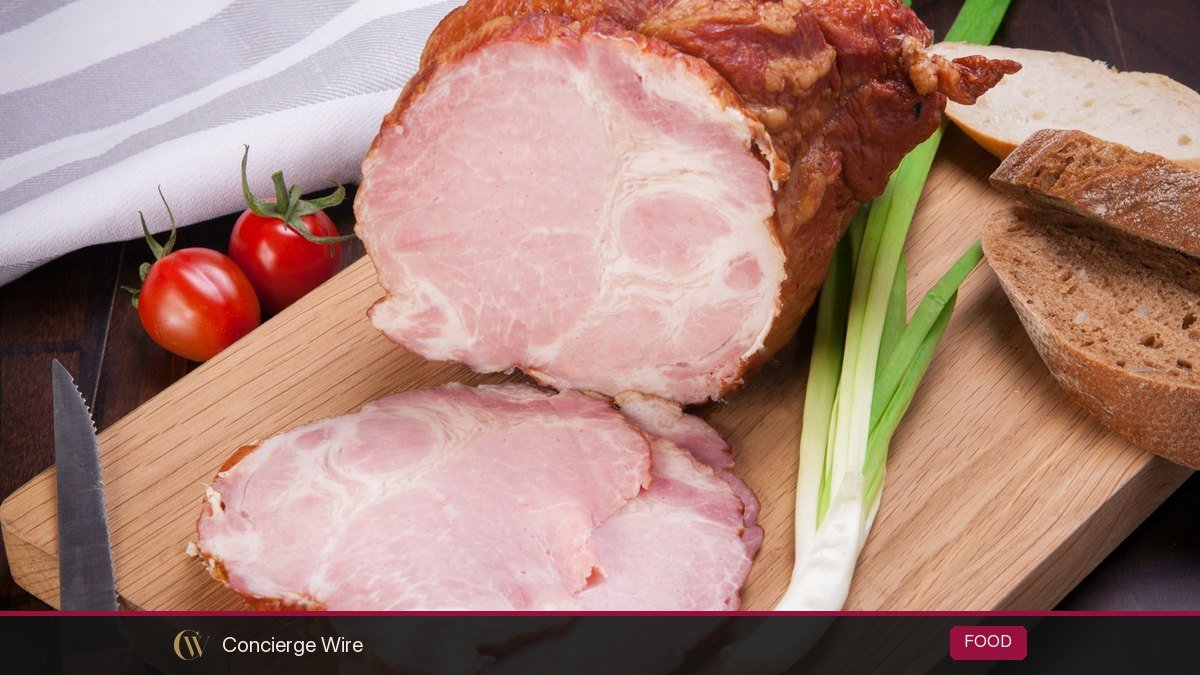
Most Christmas hams sold in the US are already fully cooked, so your real job is to reheat one to 140°F without drying it out, or to cook a fresh or “cook-before-eating” ham to 145°F with a 3-minute rest. This guide gives you the USDA cooking times per pound for every common type of ham, a simple method for spiral, bone-in and fresh hams, four glazes, and the food safety rules for leftovers.
Key Takeaways
- Read the label first. “Fully cooked” ham needs reheating to 140°F; “cook before eating” and fresh hams must reach 145°F, then rest at least 3 minutes.
- USDA guidance is to use an oven set no lower than 325°F for all ham.
- A spiral-cut ham reheats at roughly 10 minutes per pound, covered tightly in foil, so a 9 lb ham takes about 1.5 hours.
- Glaze goes on in the last 15 to 30 minutes, not at the start, or the sugar burns.
- Refrigerate leftovers within 2 hours and use them within 3 to 5 days, or freeze them.
Updated November 2026. Christmas Day 2026 falls on a Friday.
Quick answer: Heat the oven to 325°F. A fully cooked bone-in half ham (5 to 7 lb) needs about 18 to 24 minutes per pound to reach 140°F. A spiral-cut ham (7 to 9 lb) needs about 10 to 18 minutes per pound. A fresh, uncooked whole leg (12 to 16 lb) needs 22 to 26 minutes per pound to reach 145°F. Always confirm with a food thermometer in the thickest part, away from the bone.
Step One: Work Out Which Ham You Bought
Cooking times only make sense once you know the type of ham. The word “ham” covers several very different products, and the cooking instructions differ for each. The US Department of Agriculture’s Food Safety and Inspection Service (FSIS) groups them like this:
- Fully cooked (ready-to-eat) ham. This is what most supermarkets sell at Christmas, including most spiral-cut hams. It can be eaten cold straight from the package if it was packaged in a USDA-inspected plant. Heating it is about warmth and flavor, not safety.
- Cook-before-eating ham. Cured and often smoked, but not cooked enough to be safe. The label will say something like “cook thoroughly” and will carry cooking directions.
- Fresh ham. An uncured leg of pork. It looks pale pink or beige like a pork roast, not deep rose like cured ham, and the label will include the word “fresh.” Treat it exactly like a pork roast.
- Country ham. Dry-cured and very salty. It usually needs soaking before cooking. Always follow the producer’s instructions.
Look for the phrases “fully cooked,” “cook before eating” or “fresh” on the package. If you cannot find them, ask the butcher or treat the ham as cook-before-eating and take it to 145°F.
How much ham to buy
FSIS suggests about 1/4 to 1/3 lb per serving for boneless ham and 1/3 to 1/2 lb per serving for bone-in ham. For a dinner of 10 adults, that means roughly 3 to 3.5 lb boneless or 3.5 to 5 lb bone-in. If you want leftovers for sandwiches and soup, buy a half ham one size up.
| Guests | Boneless ham | Bone-in ham | With generous leftovers (bone-in) |
|---|---|---|---|
| 4 | 1 to 1.5 lb | 1.5 to 2 lb | 3 to 4 lb |
| 8 | 2 to 2.75 lb | 2.75 to 4 lb | 5 to 7 lb (half ham) |
| 12 | 3 to 4 lb | 4 to 6 lb | 7 to 9 lb (spiral half) |
| 20 | 5 to 6.75 lb | 6.75 to 10 lb | 10 to 14 lb (whole ham) |
Ham Cooking Times Per Pound (USDA Timetable)
These are the approximate times from the FSIS Ham and Food Safety fact sheet, all with the oven set to 325°F. Times are a planning tool; the thermometer decides when the ham is done.
| Type of ham | Weight | Minutes per pound | Target internal temp |
|---|---|---|---|
| Smoked, cook-before-eating, whole, bone-in | 10 to 14 lb | 18 to 20 | 145°F + 3 min rest |
| Smoked, cook-before-eating, half, bone-in | 5 to 7 lb | 22 to 25 | 145°F + 3 min rest |
| Smoked, cook-before-eating, shank or butt portion, bone-in | 3 to 4 lb | 35 to 40 | 145°F + 3 min rest |
| Smoked, cook-before-eating, arm picnic shoulder, boneless | 5 to 8 lb | 30 to 35 | 145°F + 3 min rest |
| Smoked, cook-before-eating, shoulder roll (butt), boneless | 2 to 4 lb | 35 to 40 | 145°F + 3 min rest |
| Smoked, fully cooked, whole, bone-in | 10 to 14 lb | 15 to 18 | 140°F |
| Smoked, fully cooked, half, bone-in | 5 to 7 lb | 18 to 24 | 140°F |
| Smoked, fully cooked, arm picnic shoulder, boneless | 5 to 8 lb | 25 to 30 | 140°F |
| Canned ham, boneless | 3 to 10 lb | 15 to 20 | 140°F |
| Vacuum-packed, boneless | 6 to 12 lb | 10 to 15 | 140°F |
| Spiral-cut, whole or half | 7 to 9 lb | 10 to 18 | 140°F |
| Fresh ham, uncooked, whole leg, bone-in | 12 to 16 lb | 22 to 26 | 145°F + 3 min rest |
| Fresh ham, uncooked, whole leg, boneless | 10 to 14 lb | 24 to 28 | 145°F + 3 min rest |
| Fresh ham, uncooked, half, bone-in | 5 to 8 lb | 35 to 40 | 145°F + 3 min rest |
One extra rule from the same fact sheet: a cooked ham that was repackaged somewhere other than a USDA-inspected plant, or leftover cooked ham, should be reheated to 165°F rather than 140°F. If you bought a ham sliced and wrapped at a deli counter, use 165°F.
Worked example: timing a Christmas dinner
Say you have an 8 lb fully cooked spiral half ham and want to eat at 5:00 p.m. At about 10 to 12 minutes per pound under foil, that is roughly 80 to 96 minutes. Add 20 minutes for the ham to sit out while the oven heats, about 15 minutes for glazing, and 15 minutes of resting under foil. Working backward, the ham goes into the oven around 2:45 p.m., the glaze goes on at about 4:15 p.m., and it comes out at 4:30 to 4:40 p.m. Start checking the temperature 20 minutes before you expect it to be ready.
How to Reheat a Spiral-Cut Ham Without Drying It Out
Spiral hams are sliced all the way to the bone, so they lose moisture fast. FSIS notes they are safe to eat cold and are often best that way. If you want them warm, this method keeps them juicy.
- Take it out of the fridge 20 to 30 minutes ahead. Keep it wrapped. Do not leave it out longer than that.
- Heat the oven to 325°F. Not lower; FSIS advises against setting the oven below 325°F for ham.
- Set it cut-side down in a roasting pan or a rimmed dish. Add about 1/2 cup of water, stock, apple cider or orange juice to the pan.
- Cover the entire ham tightly in heavy foil. FSIS gives about 10 minutes per pound for a covered spiral ham. Tight foil is what stops the slices curling and drying.
- Check early. Insert a thermometer into the thickest part, not touching the bone. You are aiming for 140°F.
- Glaze at the end. When the ham is about 120°F, remove the foil, brush on glaze, raise the oven to 400 to 425°F and bake 10 to 15 minutes until the glaze bubbles. Watch it; sugar burns quickly.
- Rest 10 to 15 minutes loosely tented, then cut along the bone to release the slices.
How to Cook a Bone-In Ham (Fully Cooked or Cook-Before-Eating)
An unsliced bone-in ham is more forgiving than a spiral, and many cooks think it tastes better because the meat stays intact until carving.
- Trim and score. If there is a thick rind, cut it away and leave about 1/4 inch of fat. Score the fat in a diamond pattern about 1/2 inch deep so glaze can sink in. Studding each diamond with a clove is traditional but optional.
- Roast fat-side up on a rack in a roasting pan with a little liquid in the bottom, at 325°F.
- Cover loosely with foil for most of the cooking time.
- Use the table above for timing. A 6 lb fully cooked half ham at 18 to 24 minutes per pound needs about 1 hour 50 minutes to 2 hours 25 minutes. A 6 lb cook-before-eating half ham at 22 to 25 minutes per pound needs about 2 hours 10 minutes to 2.5 hours.
- Glaze in the last 20 to 30 minutes, uncovered, brushing two or three times.
- Check the temperature: 140°F for fully cooked, 145°F for cook-before-eating, then rest at least 3 minutes. In practice, 15 minutes of rest makes carving cleaner.
Carving a bone-in ham
Place it on a board with the meatiest side up. Cut a few slices from the thin side to make a flat base, turn it onto that base, then make vertical slices down to the bone. Run the knife along the bone to release them.
How to Cook a Fresh Ham
A fresh ham is raw pork, so it cooks like a large pork roast and needs longer. Many people salt or brine it a day ahead for better seasoning.
- Prep the day before: pat dry, score the skin, and rub with salt (roughly 1 tablespoon of kosher salt per 5 lb is a common starting point), pepper, garlic and herbs. Refrigerate uncovered overnight.
- Roast at 325°F on a rack. A 14 lb bone-in whole leg at 22 to 26 minutes per pound needs about 5 to 6 hours. A half bone-in fresh ham of 6 lb at 35 to 40 minutes per pound needs about 3.5 to 4 hours.
- Cook to 145°F measured in the thickest part, then rest at least 3 minutes. FSIS notes you can choose to cook meat to a higher temperature for personal preference; a fresh ham that you want to pull apart is often taken well above 145°F.
- Crisp the skin by raising the oven to 425°F for the last 15 to 20 minutes if it has not crackled.
Country Ham: Soak, Simmer, Then Glaze
Country hams from places like Virginia, Kentucky and Tennessee are dry-cured with salt and aged, so they are intensely salty. FSIS gives this general method for a whole or half country ham: soak it 4 to 12 hours or longer in the refrigerator, then cover with water and boil 20 to 25 minutes per pound. Drain, glaze, and brown at 400°F for 15 minutes. Mold on the outside of an uncut country ham is common; FSIS advises scrubbing it off with a stiff brush rather than throwing the ham away. Producers often give their own instructions, and those come first.
Four Christmas Ham Glazes
Each recipe makes enough for an 8 to 10 lb ham. Warm the ingredients in a small saucepan for 3 to 5 minutes until syrupy, then brush on during the last 15 to 30 minutes.
| Glaze | Ingredients | Best with |
|---|---|---|
| Brown sugar and mustard | 1 cup packed brown sugar, 3 tbsp Dijon mustard, 2 tbsp apple cider vinegar, pinch of ground cloves | Spiral and bone-in smoked ham |
| Honey and orange | 1/2 cup honey, zest and juice of 1 orange, 2 tbsp butter, 1/4 tsp cinnamon | Spiral ham; kid-friendly |
| Maple and bourbon | 1/2 cup pure maple syrup, 3 tbsp bourbon (or apple juice), 2 tbsp whole-grain mustard, black pepper | Bone-in ham, country ham |
| Pineapple and ginger | 1 cup pineapple juice, 1/2 cup brown sugar, 1 tbsp grated fresh ginger, 1 tbsp soy sauce; simmer 10 min to reduce | Boneless or canned ham |
Two practical notes. First, glazes with lots of sugar scorch above 400°F, so stay in the room. Second, if you baste with glaze that has touched raw pork from a fresh ham, bring the leftover glaze to a full boil before you serve it as a sauce.
Common Ham Mistakes and How to Fix Them
- Cooking by the clock only. Ovens vary, and hams vary in shape. Buy a $15 instant-read thermometer; it is the most useful holiday tool you will own.
- Uncovered spiral ham. It dries in under an hour. Foil it tightly and add liquid to the pan.
- Glazing too early. The sugar burns and turns bitter. Glaze at the end.
- A very low oven to “keep it moist.” FSIS advises 325°F minimum.
- Thawing on the counter. Thaw a frozen ham in the refrigerator. Allow about 4 to 6 hours per pound, so a 10 lb ham needs about two days.
- Salty country ham. Soak longer and change the water once or twice.
Leftover Ham: Storage Times and Safety
The CDC’s four steps to food safety apply to holiday buffets too: never leave perishable food out for more than 2 hours (1 hour if it is above 90°F), and keep the fridge at 40°F or below. For ham specifically, the FSIS storage chart gives these limits:
| Ham | Refrigerator | Freezer (for quality) |
|---|---|---|
| Fresh ham, uncooked | 3 to 5 days | 6 months |
| Fresh ham, cooked | 3 to 4 days | 3 to 4 months |
| Cook-before-eating ham, uncooked | 5 to 7 days or “use-by” date | 3 to 4 months |
| Cooked ham, vacuum sealed at plant, unopened, dated | “Use-by” date | 1 to 2 months |
| Cooked ham, whole, store-wrapped | 7 days | 1 to 2 months |
| Spiral-cut ham and leftovers from home-cooked ham | 3 to 5 days | 1 to 2 months |
Frozen ham stays safe indefinitely; the freezer limits are about taste and texture. Slice leftovers off the bone, pack them in shallow containers, and reheat to 165°F.
Frequently Asked Questions
How long do I cook a 10 lb fully cooked ham at 325°F?
A 10 lb fully cooked whole bone-in ham at 15 to 18 minutes per pound needs about 2.5 to 3 hours. If it is a spiral-cut ham covered in foil, start checking after about 1 hour 40 minutes. In both cases, take it out at 140°F.
Is ham done at 140°F or 145°F?
Both, depending on the type. A fully cooked ham packaged in a USDA-inspected plant only needs reheating to 140°F. A cook-before-eating or fresh ham must reach 145°F and rest for at least 3 minutes. Leftovers and hams repackaged outside an inspected plant should be reheated to 165°F.
Can I serve a spiral ham cold?
Yes. FSIS says spiral-cut cooked hams are safe to eat cold, and many people prefer them that way because heating can dry the slices. Keep it refrigerated until about 30 minutes before serving.
Should I cover ham with foil in the oven?
Yes for most of the cooking time, especially spiral hams. Remove the foil only for the final 10 to 30 minutes when you add the glaze.
How far ahead can I buy a Christmas ham?
A plant-sealed, dated cooked ham can be kept unopened until its “use-by” date. A store-wrapped whole cooked ham lasts about 7 days in the fridge. A fresh ham should be cooked within 3 to 5 days, or frozen and thawed in the refrigerator.
Can I cook ham in a slow cooker?
A small boneless or half ham that fits with the lid closed can be heated in a slow cooker. FSIS says hams can be cooked in countertop appliances, but follow the appliance’s directions and still check that the meat reaches the right temperature.
Your Christmas Ham Plan in One Line
Check the label, set the oven to 325°F, use the timetable to plan your start time, cover it, glaze late, and let a thermometer tell you when it is done: 140°F for fully cooked, 145°F plus a short rest for fresh or cook-before-eating ham. Get the leftovers into the fridge within two hours and you have sandwiches and soup sorted for the week after Christmas.