How to Write a Speaker Bio: Templates, Examples and Tips
A simple formula, three ready-to-adapt templates and examples for writing a speaker bio, plus headshot advice and the spoken introduction hosts need.
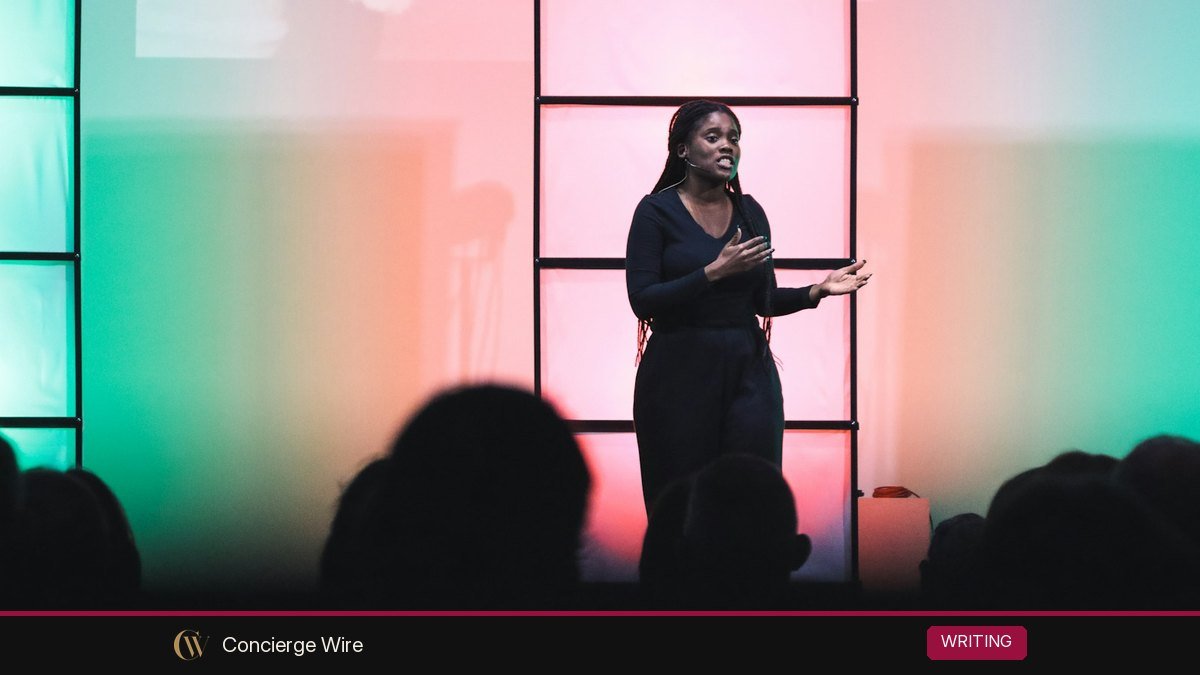
A good speaker bio tells an event organizer, a podcast host and an audience three things in a few seconds: who you are, why you are credible on this topic, and why the talk will be worth their time. This guide gives you a simple formula, copy-and-adapt templates in three lengths (about 50, 100 and 200 words), worked examples, and practical advice on headshots and the spoken introduction someone will read before you walk on stage.
Key Takeaways
- Write in the third person, lead with your current role and the topic you are speaking on, and back it with one or two specific proof points.
- Keep three versions ready: a short bio (about 50 words), a medium bio (about 100) and a long bio (about 200).
- Tailor the middle of the bio to each event; your title and name stay the same, your proof points should match the audience.
- Write a separate spoken introduction of 30 to 45 seconds for the host to read aloud. A written bio is not a script.
- Send a recent, well-lit headshot in both horizontal and vertical crops with every bio.
What a speaker bio is for (and how it differs from a resume)
Your speaker bio shows up in more places than you expect: the conference website and app, the printed program, the sponsor deck, the podcast show notes, the event’s social posts and sometimes a press release about the lineup. Organizers copy and paste it. Hosts skim it two minutes before they introduce you.
That shapes how you should write it. A resume lists everything you have done. A speaker bio picks the few facts that make you the right person to talk about this topic to this audience, and it says them in plain language someone can read aloud without stumbling.
Think of it the way PR teams think of a company’s “About” paragraph at the bottom of a news release: a short, fixed block that does a specific job. If you have ever written a press release boilerplate, you already know the discipline of fitting credibility into a small space.
The 5-part speaker bio formula
Almost every strong bio follows the same order. Use it as a checklist.
- Name and current role. “Maria Chen is the founder and CEO of Northpoint Logistics.” Start with this every time.
- Area of expertise, tied to the talk. What you are known for, phrased to match the session topic. “She helps mid-sized retailers cut shipping costs.”
- Proof. One to three concrete credentials: a result, a number you can stand behind, a notable client type, a book, a recognized award or a relevant prior role.
- A human detail (optional). One short line about where you live, a hobby or a cause. It makes the host’s introduction warmer.
- Where to find you. Website, LinkedIn or podcast name. Keep it to one or two items.
Third person or first person?
Use the third person (“Maria leads…” not “I lead…”) for conference programs, event websites and anything a host will read aloud. It sounds natural coming from someone else, and organizers expect it. A first-person version is fine for your own website, LinkedIn “About” section or a casual podcast description, but keep the third-person version as your master copy.
Short, medium and long templates
Event organizers ask for bios in very different lengths, often with a character limit in a submission form. Write all three once and you will never scramble again.
| Version | Length | Where it is used | What to include |
|---|---|---|---|
| Short | 40–60 words (1–2 sentences) | Event apps, panel listings, social posts, podcast show notes | Name, role, expertise, one proof point |
| Medium | 90–120 words (one paragraph) | Conference websites, programs, speaker submission forms | All five parts of the formula, one or two proof points |
| Long | 180–250 words (2–3 paragraphs) | Keynotes, media kits, webinar landing pages, award dinners | Career arc, several proof points, personal detail, contact |
Short bio template (about 50 words)
[Full name] is the [title] of [organization], where [he/she/they] [what you do in plain words]. [He/She/They] [single strongest proof point]. [Name] is speaking on [topic or session theme].
Medium bio template (about 100 words)
[Full name] is the [title] of [organization], a [one-line description of the organization]. [He/She/They] specializes in [expertise tied to the session], helping [type of client or audience] [result]. Before [organization], [Name] [relevant prior role or achievement]. [Second proof point: book, award, notable project, or measurable result]. [Name] lives in [city] and [one human detail]. Learn more at [website or LinkedIn].
Long bio template (about 200 words)
Paragraph 1: [Full name] is the [title] of [organization]. One sentence on what the organization does and who it serves. One sentence on your specific expertise and the problem you solve.
Paragraph 2: Your career arc in three or four sentences, most relevant experience first. Include two or three proof points: results, recognitions, publications, notable roles.
Paragraph 3: Speaking and media credentials if any (where you have spoken, been quoted or hosted). One human detail. Where to find you.
Worked examples you can adapt
The people below are illustrative, not real. They show how the same formula changes with the speaker and the audience.
Example 1: Small-business founder, short bio for a local chamber event
Luis Ortega is the owner of Ortega Family Bakery in San Antonio, which grew from a farmers market stand to two storefronts in six years. He is speaking on how small food businesses can build a wholesale channel without losing their retail customers.
Why it works: one sentence of credibility with a clear growth story, one sentence that names the talk’s value. 45 words.
Example 2: B2B marketer, medium bio for an industry conference
Priya Shah is the head of marketing at Ledgerline, a payroll software company serving restaurants and hospitality groups. She focuses on account-based marketing for small sales teams and has built Ledgerline’s pipeline program from the ground up since joining in 2021. Before Ledgerline, Priya spent eight years in agency roles running campaigns for regional banks and credit unions. She writes a monthly newsletter on B2B demand generation and mentors early-career marketers through a local women-in-tech group. Priya lives in Denver with her family and a very loud beagle. Connect with her on LinkedIn.
Why it works: the expertise line matches a conference track on demand generation, the proof is specific without inflated claims, and the beagle gives the host an easy, friendly line.
Example 3: Expert guest, short podcast version
Dr. Hannah Brooks is a licensed clinical psychologist and the author of a workbook on burnout for healthcare workers. On this episode she shares practical ways managers can spot burnout before it turns into turnover.
Why it works: podcasts want a bio the host can read in one breath and that previews the episode. If you are pitching shows, our guide on how to get on podcasts as a guest covers the pitch itself.
How to tailor one bio for every event
Keep a master long bio and edit downward. For each event, change only the middle of the bio, the expertise line and the proof points, so they match the audience.
| Event type | Lead with | Proof points that land | Tone |
|---|---|---|---|
| Industry conference | Specialty within the industry | Results, roles, known clients or employers | Professional, specific |
| Local business event | Your business and community ties | Years in business, local growth, community work | Warm, plain-spoken |
| Podcast | The episode topic | One credential and a story hook | Conversational |
| University or student event | Career path | Education, early career turning points | Encouraging, approachable |
| Webinar or virtual summit | The problem the session solves | Practical outcomes for attendees | Direct, benefit-focused |
Your talk title matters as much as your bio, because it sits right above it in the program. A short, specific title beats a clever one. If you want a second opinion on wording, run a few versions through a free headline analyzer and pick the clearest.
Mistakes that weaken a speaker bio
- Starting with your childhood or education. Unless your degree is the point, lead with what you do now.
- Listing every job. Two relevant roles are stronger than eight unrelated ones.
- Vague superlatives. “Thought leader,” “visionary” and “passionate expert” tell the audience nothing. Replace each with a fact.
- Unverifiable or inflated numbers. If a host or journalist checks a claim and it does not hold up, your credibility goes with it. Only use figures you could document.
- Jargon and acronyms. If a host would stumble saying it, rewrite it.
- Outdated details. An old job title in a program is a common and avoidable embarrassment. Put a reminder in your calendar to update your bio every quarter.
- Ignoring the word limit. If a form allows 500 characters, do not send 900 and hope. Organizers will cut it for you, usually from the end.
Headshot tips that match your bio
Most organizers ask for a photo with the bio, and a poor one undercuts a good paragraph. You do not need an expensive shoot, but you do need the basics right.
- Recent: taken within the last two years and looking like you do now.
- Light: soft, even light on your face; a window on a cloudy day works well. Avoid harsh overhead light.
- Framing: head and shoulders, with some space around you so designers can crop it into circles, squares or wide banners.
- Background: plain or gently blurred. No busy offices, no logos you do not own.
- Files: provide a high-resolution JPG (at least 1,500 pixels on the short side is a safe target) in both vertical and horizontal crops.
- Naming: name the file firstname-lastname-headshot.jpg so organizers can find it.
Keep your bio and headshots in one shared folder or a simple speaker page. A media kit works the same way for companies: one link, everything an organizer needs.
Write your spoken introduction separately
The bio in the program is written to be read silently. The introduction a host says out loud is a different piece of writing, and most speakers forget to provide one. If you do not send it, the host will improvise from your long bio, often reading the whole thing.
Toastmasters International’s guidance on how to introduce a speaker recommends keeping introductions to 30 to 45 seconds, emphasizing the speaker’s expertise in the topic and setting the mood without giving a preliminary talk. In the same issue, a professional speaker explains why she writes her own introduction rather than letting hosts read her website bio.
Spoken introduction template (30–45 seconds, about 80–110 words)
“[One-sentence hook about the problem the talk addresses.] Our next speaker has spent [time] helping [audience] with exactly that. As [title] of [organization], [Name] has [one strong proof point]. [Optional second proof point or human detail.] Today [he/she/they] will show us [the promise of the talk]. Please welcome [Full name].”
Tips for the intro script
- Print it in large type, double-spaced, and hand it to the host in person, even if you emailed it.
- Spell out hard names phonetically: “Siobhan (shi-VAWN).”
- End with your name. It is the host’s cue and the audience’s cue to clap.
- Read it aloud and time it. If it runs over 45 seconds, cut proof points, not the hook.
A quick checklist before you send
- Name and current title are correct and match LinkedIn.
- The expertise line matches this event’s session topic.
- Every number and credential can be backed up.
- The length fits the organizer’s word or character limit.
- Third person for the program; spoken intro attached separately.
- Headshots attached in two crops, named clearly.
- One link only, and it works.
- Someone else has read it aloud without stumbling.
Frequently Asked Questions
How long should a speaker bio be?
It depends on where it appears. Keep a short version of about 50 words for apps and show notes, a medium version of about 100 words for conference websites and programs, and a long version of about 200 words for keynotes and media kits. Always follow the organizer’s limit.
Should a speaker bio be in first or third person?
Third person for anything an event will publish or a host will read aloud. First person is acceptable on your own website or social profiles, but keep the third-person version as your master copy.
What if I don’t have big credentials yet?
Use specific, honest experience instead: years doing the work, the type of clients you serve, a project you led or a result you achieved. Specific beats impressive-sounding every time.
Should I mention my company’s products in my bio?
Name your company and what it does in one line. Event organizers and audiences dislike bios that read like ads, and many events ask speakers to avoid sales pitches on stage, so keep product claims out.
What is the difference between a speaker bio and a speaker introduction?
The bio is written to be read in a program or on a website. The introduction is a short script, about 30 to 45 seconds, written to be spoken by the host just before you walk on stage.
How often should I update my speaker bio?
Review it every quarter and before every event. Update it immediately after a job change, a book release or a significant award.
Write it once, reuse it all year
Set aside one hour this week to draft your three bio lengths, your spoken introduction and a fresh headshot. Save them in one place. The next time an organizer emails “Can you send your bio and photo by Friday?”, you will reply in five minutes with something that makes you look like the obvious choice for the stage.