How to Write an Event Press Release (Before and After)
Templates and timing for pre-event and post-event press releases, plus how a media alert differs and how to list your event in search.
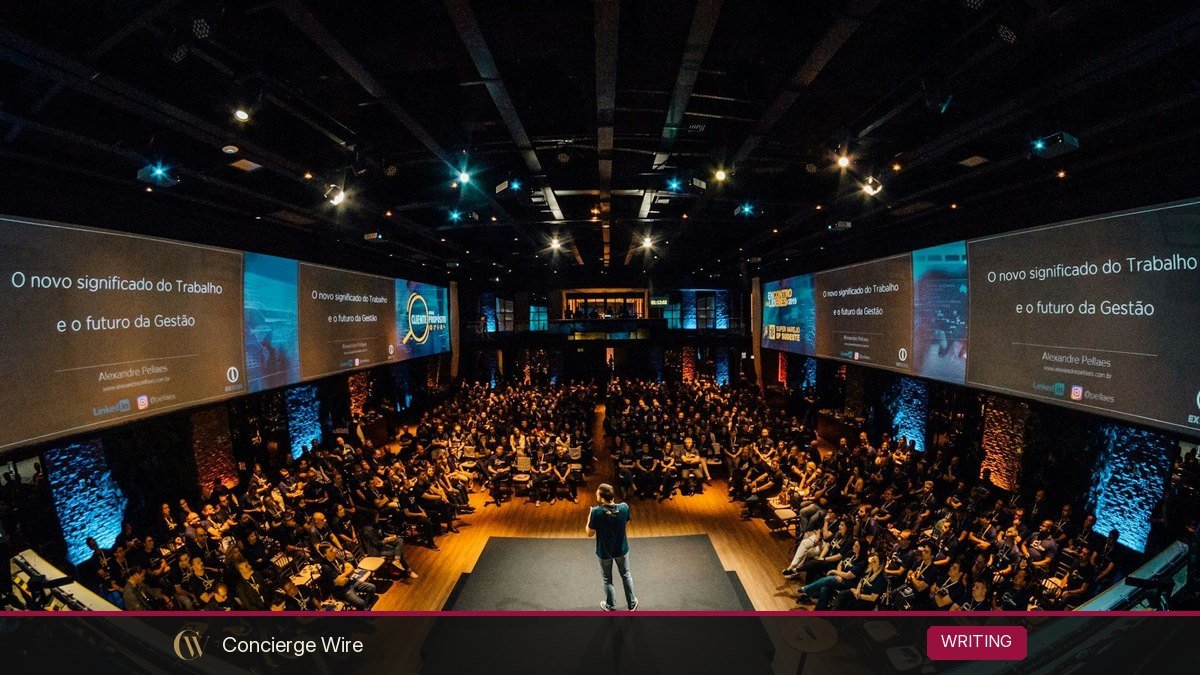
An event press release does two different jobs depending on when you send it: before the event it gets reporters, photographers and attendees to show up, and after the event it gives media who missed it a finished story with results, quotes and photos. This guide shows how to write both versions, when to use a short media alert instead, and gives you templates you can copy for a grand opening, a fundraiser or a conference.
Key Takeaways
- Write two releases, not one: a pre-event announcement that sells the reason to attend, and a post-event release that reports what happened.
- A media alert (or advisory) is a one-page logistics sheet for assignment desks; a press release is a story. Most events benefit from both.
- Put the five W’s, the exact address and photo opportunities high in the copy. Assignment editors decide in seconds.
- Send the announcement two to four weeks out, the media alert a few days before, and the recap within 24 hours.
- Add the event to your website with event structured data so it can show up in search, and keep the details identical everywhere.
What counts as a newsworthy event?
Not every event deserves a release. A weekly happy hour at your shop probably does not. These usually do:
- Grand openings, relocations and ribbon cuttings, especially if a local official or chamber of commerce attends.
- Fundraisers and charity drives with a clear dollar goal or community beneficiary.
- Conferences, workshops and trade shows where named experts speak.
- Public demonstrations, product unveilings or free community days.
- Anniversaries with a real milestone (25 years in business, the 10,000th customer served).
- Award ceremonies and competitions with local winners.
Ask yourself one question: would someone who does not work for my company find this interesting enough to drive across town? If the honest answer is no, change the event (add a speaker, a giveaway for a cause, a first-of-its-kind demo) before you write the release. If you are not sure what makes something news, our explainer on what a press release is and when to use one walks through the basics.
Media alert vs. press release: which do you need?
This is where many small businesses get confused. Both are sent to media, but they are read by different people for different reasons.
| Media alert (advisory) | Event press release | |
|---|---|---|
| Purpose | Tell assignment desks where to send a reporter or camera | Tell a story a reporter can write or publish |
| Length | Under one page, often bullet points | 400 to 700 words in paragraphs |
| Format | WHAT / WHO / WHEN / WHERE / WHY / VISUALS / CONTACT | Headline, dateline, lead, quotes, boilerplate |
| Timing | A few days before, then a reminder the morning of | Weeks before (announcement) and right after (recap) |
| Best for | TV, photographers, local news desks | Online outlets, trade press, newsletters, your newsroom page |
| Can be published as-is? | No | Often, by smaller outlets and calendars |
A good rule: if the event is mostly visual and happens at a single time and place (a ribbon cutting, a giant check presentation), the media alert does most of the work. If the event has a story beyond the day itself (a new program, a conference theme, results), you need a full release. Most events of any size use both.
Timeline for event publicity
| When | What to send | To whom |
|---|---|---|
| 6 to 8 weeks before | Short pitch about the event and any notable speakers | Monthly magazines, community calendars with long deadlines |
| 2 to 4 weeks before | Pre-event press release | Local news, trade press, industry newsletters, event listing sites |
| 3 to 5 days before | Media alert | Assignment desks, photo desks, local TV and radio |
| Morning of the event | Media alert reminder plus a phone call to key desks | The same desks |
| Within 24 hours after | Post-event release with photos | Everyone on the original list, plus outlets that could not attend |
Many community calendars and local business journals take event listings through a web form rather than email. Find those forms early, because some have deadlines weeks ahead of publication.
Who belongs on an event media list
For a local event, a useful list is short and specific. Include the assignment desk at each local TV station, the photo desk and the community or business reporter at your local paper, the editor of your regional business journal, local radio news, neighborhood newsletters and blogs, your chamber of commerce communications person, and any trade publication that covers your industry. Add the communications staff of any partner, sponsor or nonprofit beneficiary, because they will often share the news with their own contacts. Twenty well-chosen names will outperform two hundred scraped addresses every time, and you can follow up with each of them by phone.
How to write the pre-event press release
The pre-event release sells the reason to attend or cover the event. Follow this structure:
- Headline that names the event and its hook: “Riverside Bakery to Host Free Bread-Baking Day to Raise $5,000 for Local Food Bank.” Our headline guide has more patterns.
- Subheadline with the date, time and place.
- Lead paragraph answering who, what, when, where and why in two sentences.
- Details paragraph: schedule highlights, speakers, activities, cost or registration link, parking and accessibility.
- Quote from the organizer explaining why the event matters to the community or industry.
- Media access paragraph: where reporters should check in, interview availability, photo opportunities and their times.
- Boilerplate and media contact, including a mobile number that will be answered on event day.
Details that get left out (and cost you coverage)
- The full street address, not just the venue name, plus where to park or which entrance to use.
- Time zone, if anyone outside your area might attend online.
- Whether the event is free, ticketed or invitation-only, and whether press need to register.
- The exact time of the most photogenic moment. “Ribbon cutting at 10:15 a.m.” beats “morning festivities.”
- Accessibility information for attendees with disabilities.
Template: pre-event press release
FOR IMMEDIATE RELEASE
[Organization] to Host [Event Name], [one-line hook], on [Date]
[Free/Ticketed] event at [Venue], [City], from [start] to [end] [time zone]
[CITY, State], [Date] – [Organization] will host [Event Name], a [type of event] that [purpose], on [day, date] from [time] to [time] at [venue, full address].
The event will feature [speakers, activities, demonstrations]. [Registration details or ticket price, with the URL as plain text.] [Who the event is for.]
“[Quote about why the event matters and what attendees will gain],” said [Name], [title] at [Organization].
[Optional paragraph: background, partners, sponsors, beneficiary.]
Media access: Reporters and photographers are welcome. Check in at [location] from [time]. [Photo opportunity] will take place at [time]. Interviews with [names] are available on request.
About [Organization]
[Boilerplate.]Media contact: [Name], [email], [mobile, answered on event day]
Template: media alert
Keep the alert scannable. Assignment editors often read it on a phone between other tasks.
MEDIA ALERT
[Short headline with the visual hook]
WHAT: [One or two sentences.]
WHO: [Named speakers, officials, partners.]
WHEN: [Day, date, start and end time, time zone.]
WHERE: [Venue, full address, parking, entrance.]
WHY: [One sentence on the community or industry significance.]
VISUALS: [What a camera will see, and at what time.]
CONTACT: [Name, mobile, email.]
How to write the post-event press release
The recap release is the one most small businesses skip, and it is often the one that gets published. Reporters who could not attend, trade newsletters and local websites are happy to run a finished story with good photos, as long as it reads like news and not like a thank-you note.
Lead with the outcome, not the fact that the event happened. Compare:
- Weak: “Riverside Bakery held its first Community Bread Day on Saturday.”
- Strong: “More than 300 residents baked bread at Riverside Bakery on Saturday, raising $6,200 for the Eastside Food Bank, 24% above the event’s goal.”
(Both examples, and the bakery, are illustrative.)
Include:
- Numbers: attendance, money raised, items collected, sign-ups, participants. Only use figures you have counted.
- One or two quotes gathered on the day, from a speaker, a beneficiary or an attendee who agreed to be quoted.
- What happens next: the next event date, how people can still donate, where to watch the recording.
- Two to five captioned photos with names of identifiable people (with their permission) and a photo credit.
Template: post-event press release
FOR IMMEDIATE RELEASE
[Event Name] [Result with a number], [secondary result]
[CITY, State], [Date] – [Number] people attended [Event Name] at [Venue] on [day], [main outcome with figures].
[Paragraph on highlights: who spoke, what was announced, what attendees did.]
“[Quote reflecting on the result],” said [Name], [title].
“[Quote from a beneficiary, partner or attendee],” said [Name], [description].
[What happens next: next date, ongoing campaign, recording link, how to get involved.]
Photos from the event are available at [link] (credit: [photographer]).
About [Organization]
[Boilerplate.]Media contact: [Name], [email], [phone]
Want to see how finished releases read in different industries? Browse our press release examples and compare the opening lines.
Put the event on your website and in search
Your own event page is where every journalist, calendar editor and attendee will land, so make sure it matches the release word for word on dates, times and address. Two technical steps help:
- Add event structured data. Google’s event structured data documentation lists the required properties: the event name, the start date in ISO-8601 format, and a location with a name and full address. It also states that purely virtual events with no physical component are not supported for that search experience.
- Use the right attendance mode. The schema.org Event type lets you mark an event as offline, online or mixed, and set a status such as EventCancelled, EventPostponed or EventRescheduled if plans change. Update it the moment anything changes.
If you are not comfortable editing code, most event plugins for WordPress and website builders add this markup for you. Check it after publishing.
Common mistakes with event releases
- Sending too late. A release that lands the day before gives a news desk no time to plan a crew.
- Writing an invitation instead of a release. “Join us for a fun-filled afternoon!” is marketing copy. Write in the third person and give facts.
- Burying the date and address. These belong in the subheadline and the first paragraph.
- No one to greet media. Assign a person to meet reporters, hand them a one-page fact sheet and introduce speakers.
- Skipping the recap. The post-event release is often the version that gets published, and it gives you a record for next year’s pitch.
- Inconsistent details. If the release says 10 a.m. and the website says 10:30, reporters will not trust either.
Frequently Asked Questions
How far in advance should I send an event press release?
Send the main announcement two to four weeks before the event, a media alert three to five days before, and a reminder the morning of. Monthly magazines and some calendars need six weeks or more.
What is the difference between a media alert and a media advisory?
In practice, nothing. Both terms describe the same short WHO/WHAT/WHEN/WHERE sheet that tells news desks how to cover an event. Use whichever term your local media uses.
Should I send a press release after the event?
Yes. A recap release with results, quotes and photos is often easier for busy outlets to publish than a pre-event announcement, and it builds a track record for future events.
Do I need permission to use attendees’ photos in a press release?
It is good practice to get consent from identifiable people, especially minors, before using their photos in publicity. Post signs at the venue, add a line to registration forms and follow your state’s rules. Check with a professional if you are unsure.
Can I write one release for a virtual event?
Yes. Replace the address with the platform, registration link and time zone, and explain how media can access the stream or recording. Note that Google’s event search feature requires a physical location, so a hybrid event may get more search visibility.
How long should an event press release be?
Around 400 to 700 words for a release and a single page for a media alert. Put long schedules and speaker bios on your event page and link to it.
Before you hit send
Read the release once as a stranger. Can you tell in ten seconds what is happening, when, where, and why you should care? Is there a phone number that will be answered on event day? Is there a moment worth photographing, with a time attached? If all three answers are yes, your event has a fair chance of getting covered, and the recap release afterwards will give it a second chance.