How to Prepare for a Media Interview: 20 Tips for First-Time Founders
A practical prep guide for first-time founders: ground rules, key messages, bridging phrases, on-camera setup and what to do after the story runs.
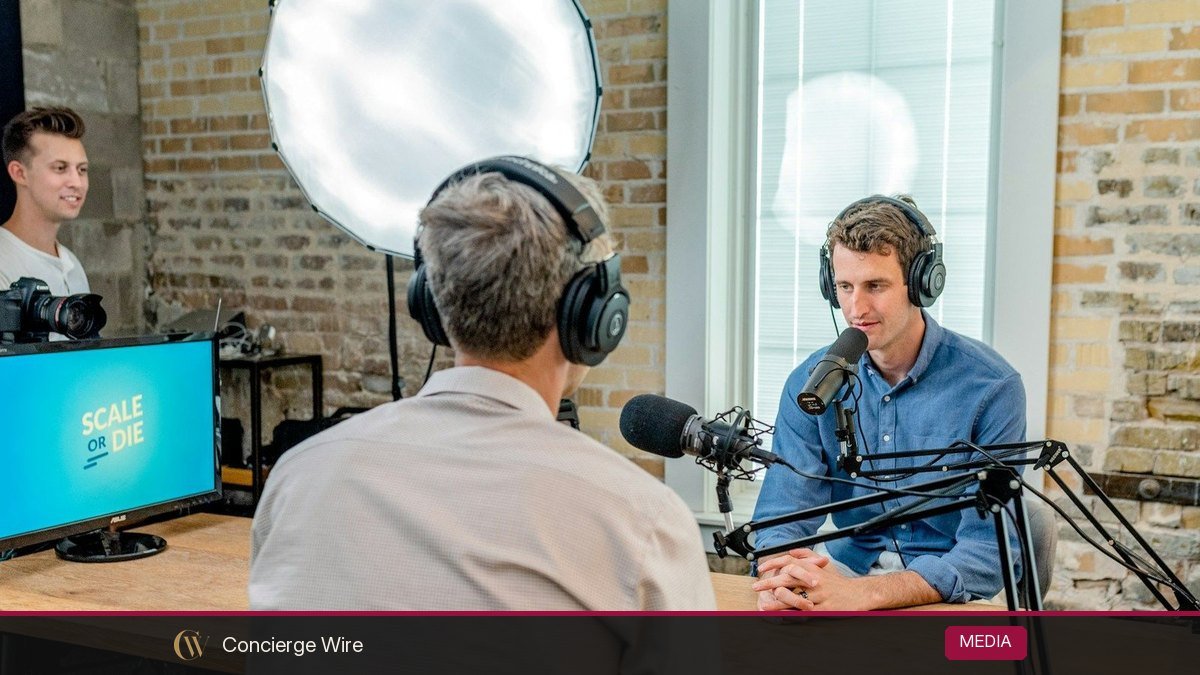
To prepare for a media interview, learn who the reporter is and what story they are writing, settle on three key messages you can say in one breath each, practice answering hard questions out loud, and know how to bridge back to your messages when a question drifts. This guide gives first-time founders 20 practical tips covering research, message building, bridging, on-camera basics and what to do after the story runs.
Key Takeaways
- Assume everything is on the record, including small talk before and after the interview.
- Three key messages, each backed by one proof point, are enough. More gets lost.
- Bridging lets you answer the question asked, then move to what matters, without dodging.
- Rehearse out loud, ideally recorded. Silent reading does not prepare you.
- For video, keep answers to roughly 10 to 20 seconds and look at the reporter, not the camera, unless told otherwise.
Before You Say Yes: Research the Opportunity
Most founders say “yes” instantly when a reporter calls. Take ten minutes first. A few quick questions help you prepare properly and show the journalist you are professional.
Tip 1: Ask what the story is about
It is perfectly normal to ask: “What’s the story you’re working on? What angle are you taking? Who else are you speaking with?” Reporters will not share their questions in advance as a rule, but most will describe the topic and why they want you.
Tip 2: Confirm the format and logistics
Is it print, online, radio, podcast, or TV? Live or recorded? In person, by phone, or by video call? How long? What is the deadline? The answers change how you prepare. A 15-minute phone call for a trade publication needs different preparation than a live two-minute TV segment.
Tip 3: Read or watch the reporter’s recent work
Spend 15 minutes on their last five stories. Notice the tone, the kinds of sources they quote, and how long the quotes are. If they write skeptical investigative pieces, prepare for tougher questions. If they write founder profiles, expect personal questions.
Tip 4: Know the publication’s audience
A local business journal’s readers care about jobs and growth in your city. A tech trade publication cares about the product. A consumer outlet wants to know what it means for ordinary people. Shape your examples to the audience, not to your investors.
Tip 5: Know the ground rules
By default, everything you say to a reporter is on the record. As SciLine’s guide to attribution rules explains, that includes casual conversations and emails, and you cannot declare something off the record after you have said it. Terms like “on background” and “off the record” only apply if you and the reporter agree before you speak, and definitions vary between newsrooms. Poynter makes the same point: both sides should assume everything is on the record unless they have agreed otherwise. For a first-time founder, the safest rule is simple: if you do not want to read it in print, do not say it.
| Term | What it usually means | First-timer advice |
|---|---|---|
| On the record | Anything you say can be quoted with your name. | Treat this as your default for every conversation. |
| On background / not for attribution | Information can be used, but attributed to a description like “a company spokesperson,” not your name. | Only by explicit agreement in advance. Rarely needed for small companies. |
| Deep background | Information can guide the story but is not attributed. | Unusual for founders; avoid. |
| Off the record | Generally not to be published, though newsrooms differ and reporters may seek to confirm it elsewhere. | Best avoided. If it must stay secret, don’t share it. |
Build Your Key Messages
Key messages are the two or three points you want the audience to remember. They keep you focused, stop you rambling, and give the reporter clean quotes. Without them, you will answer every question well and still end up with a story that says nothing useful about your company.
Tip 6: Write three messages, not ten
Each message should be one sentence you can say naturally in under 15 seconds. If you need a comma and a semicolon, it is too long.
Tip 7: Attach a proof point to each message
A message without evidence sounds like marketing. Pair each one with a fact, number, customer example, or short story. Reporters quote the proof, not the slogan.
Tip 8: Use the message worksheet
Fill in a simple table before every interview. Here is an illustrative example for a founder of a small meal-kit company in Atlanta being interviewed about rising food prices:
| Key message | Proof point | Short example or story |
|---|---|---|
| Families can eat well on a budget if they plan the week. | Our average recipe uses seven ingredients, most of them pantry staples. | A customer who cut weekday takeout by planning three meals ahead. |
| Buying locally helps us hold prices steadier. | We source produce from farms within a few hours’ drive. | How a local farm partnership helped during a supply disruption. |
| Less food waste saves money at home. | We portion ingredients to the recipe. | The founder’s own story of throwing out half-used herbs every week. |
Make sure every number you plan to use is accurate and that you are comfortable seeing it published. If a figure is confidential, do not bring it up.
Tip 9: Prepare your “why should anyone care?” answer
Reporters will often ask some version of “Why does this matter?” Have a plain-English answer that connects your work to the audience’s life, not to your funding round.
Prepare for the Tough Questions
Tip 10: List the ten questions you least want to hear
Write them down honestly: layoffs, a bad review, a competitor’s lawsuit, your funding, why your price is higher, a mistake you made. Then write a short, truthful answer for each. The goal is not to spin; it is to avoid being caught flat-footed.
Tip 11: Know what you won’t discuss, and say it gracefully
Some topics you simply cannot discuss: customer names, pending legal matters, unreleased financials, personnel issues. Prepare a polite line such as “I’m not able to talk about individual customers, but I can tell you what we see across the industry.” Avoid “no comment,” which often reads as evasive in print.
Tip 12: Rehearse out loud, and record it
Ask a colleague or friend to play the reporter and throw your ten tough questions at you. Record it on your phone and watch it back. You will hear filler words, long-winded answers, and jargon you never noticed. Do this at least twice before an important interview.
Bridging: Answer the Question, Then Steer
Bridging is the core interview skill. It means you answer the question you were asked, briefly and honestly, then connect to one of your key messages. It is not the same as dodging. If you ignore the question entirely, the reporter will notice, ask again, and possibly write that you avoided it.
Tip 13: Use the ABC method
- Acknowledge the question with a direct answer.
- Bridge with a short transition phrase.
- Communicate your key message and proof point.
Tip 14: Keep a few bridging phrases ready
| Situation | Bridging phrase |
|---|---|
| You can answer briefly, then add context | “Yes, and what that means for customers is…” |
| The question focuses on a negative | “That was a tough quarter. What we learned from it is…” |
| The question is speculative | “I can’t predict that, but what I can tell you is…” |
| The question is outside your expertise | “That’s really a question for [regulators/economists]. From where we sit…” |
| You want to emphasize a point | “The most important thing to understand is…” |
An illustrative exchange: Reporter asks, “Aren’t meal kits just expensive takeout?” A weak answer argues or dodges. A bridged answer: “Some are, and price matters to families right now. That’s why we built our recipes around pantry staples, so the average meal costs less than most delivery orders.” One honest sentence, one bridge, one message with proof.
Tip 15: Stop talking when you’ve finished
Reporters sometimes stay silent after you answer. Many people fill the gap with the least-considered thing they say all day. Answer, then stop. Silence is the reporter’s problem, not yours.
On-Camera and Video Call Basics
Tip 16: Keep answers short
For TV and video, aim for complete answers of roughly 10 to 20 seconds. Editors cut interviews into short clips, and a tight answer is more likely to be used as you intended. Start with your main point rather than building up to it.
Tip 17: Look at the reporter, not the camera
In a studio or in-person interview, keep your eyes on the person asking questions unless the producer tells you otherwise. For remote video interviews, looking at the camera lens usually works better than looking at the screen. Ask the producer which they prefer.
Tip 18: Control what you can in your setup
- Light: face a window or a lamp; avoid bright light behind you.
- Camera: at eye level, stacked on books if necessary.
- Sound: a wired headset or simple external microphone beats a laptop mic. Close windows and silence notifications.
- Background: tidy and simple. A plain wall or a neat shelf works. Remove anything confidential, like whiteboards.
- Clothing: solid, mid-tone colors. Very fine stripes and small patterns can flicker on camera.
- Connection: use a wired internet connection if you can, and close other apps.
Tip 19: Assume the microphone is always live
Microphones and cameras may be recording before the interview “starts” and after it “ends.” Keep side comments, jokes, and remarks about competitors to yourself until you have left the room or the call has disconnected.
Phone and Print Interview Tips
Print and phone interviews are more forgiving, but they have their own traps. The reporter is typing or recording, and a relaxed conversation can produce a quote you did not expect.
- Keep your key message sheet in front of you. That is a real advantage of phone interviews.
- Speak in complete sentences that make sense without the question. “Yes, definitely” is hard to quote; “We doubled our warehouse space this year because demand grew faster than we expected” is easy.
- Spell out names, titles and technical terms, and offer to email them afterward.
- If you misspeak, correct yourself right away: “Let me restate that more clearly.”
- Offer follow-up material: a fact sheet, photos, or a customer who has agreed to talk.
After the Interview
Tip 20: Follow up once, then let the reporter work
Send a short thank-you email the same day with any promised materials, correct spellings, and your direct number for follow-up questions. Do not ask to review or approve the story; most newsrooms do not allow it, and asking can damage the relationship. You can offer to fact-check specific technical details if the reporter wants that.
When the story runs:
- If there’s a factual error (wrong name, wrong number, wrong date), contact the reporter politely with the correction. Factual errors are usually fixed.
- If you dislike the angle or tone, let it go. Disagreeing with how a story was framed is not grounds for a correction, and complaining rarely helps.
- Share the story on your website’s press page, LinkedIn and newsletter, and thank the reporter publicly if appropriate.
- Debrief yourself. Which messages made it in? Which answers didn’t? Update your worksheet for next time.
Being a reliable, prepared source is how one interview becomes several. Reporters return to people who are accurate, quick and easy to quote.
Frequently Asked Questions
Can I ask for the questions in advance?
You can ask about the topic and the angle, and most reporters will share that. Many will not provide exact questions. Prepare for the topic and your tough questions rather than a script.
Can I review the article before it is published?
Generally no. Most news organizations do not let sources approve stories. Some reporters will check specific facts or technical details with you. Ask about that, but do not ask for approval.
What should I do if I don’t know the answer?
Say so, and offer to find out: “I don’t have that number in front of me. I can email it to you this afternoon.” Then do it quickly. Guessing is worse than admitting you need to check.
Should a PR person sit in on the interview?
It is common for a communications person to join, particularly at larger companies. For a small startup it is optional. If someone joins, tell the reporter in advance and keep that person quiet unless needed.
How long should my answers be?
For TV and video, roughly 10 to 20 seconds. For print and podcasts, you can go a little longer, but make your main point in the first sentence so it can be quoted on its own.
Is it OK to say “off the record”?
Only if you and the reporter agree before you share the information, and even then, understandings vary. First-time founders are better off keeping everything on the record and simply not sharing what should stay private.
Your 30-Minute Prep Routine
When the next interview request lands, run this quick routine: ask about the story and format (5 minutes), skim the reporter’s last few pieces (10 minutes), fill in your three-message worksheet with proof points (10 minutes), and say your answers to three tough questions out loud (5 minutes). It is short enough to do on deadline, and it turns a nervous first interview into a focused conversation.