How to Keep a Real Christmas Tree Fresh: Water, Cut and Safety
Simple steps to keep a real Christmas tree green through the holidays: pick a fresh tree, make the right cut, water enough, place it safely and recycle it after.
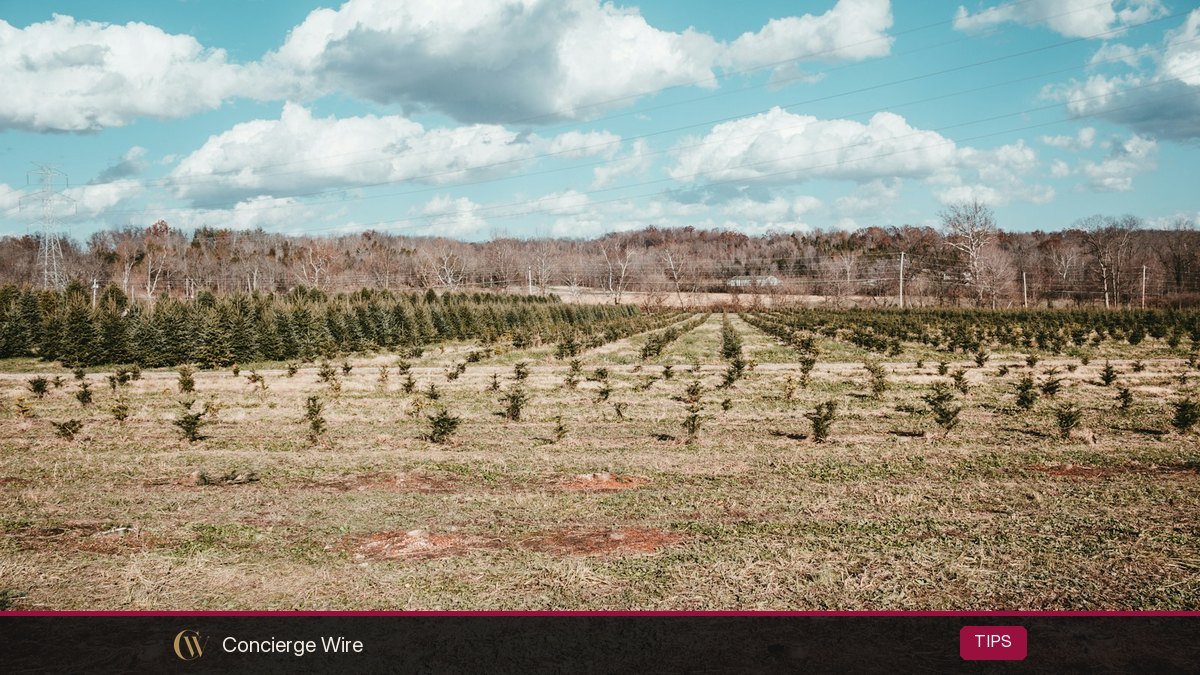
A real Christmas tree stays fresh for the whole season if you do four things: buy a fresh one, give the trunk a new straight cut, get it into water within a few hours, and never let the stand run dry. This guide covers each step in detail, how much water a tree really needs, where to place it, the fire-safety rules from the National Fire Protection Association, and how to recycle the tree when the holidays are over.
Quick answer (updated November 2026): Cut about 1/2 inch off the base straight across, put the tree in water as soon as possible (most species still take up water 6 to 8 hours after cutting), use a stand that holds about 1 quart of water per inch of trunk diameter, and check the water level every day. Keep the tree at least 3 feet from fireplaces, heaters, vents and candles, turn the lights off when you leave or go to bed, and take the tree down once it becomes dry.
Key Takeaways
- Freshness starts at the lot: flexible needles that do not fall off when you run a branch through your hand.
- A fresh, straight cut of about 1/2 inch lets the trunk absorb water; do not cut a V or whittle the bark.
- A new tree can drink a lot in the first days; a too-small stand is the most common reason trees dry out.
- Plain tap water works; the tree needs volume and consistency, not additives.
- Dry trees burn fast. Distance from heat, safe lights and prompt disposal are the core fire-safety rules.
Step 1: Choose a Fresh Tree
A tree cut weeks ago and left in the sun at a lot will not last, no matter how well you care for it at home. Test before you buy.
- The needle test: Gently pull a branch through your closed hand. A few loose needles are normal; a shower of green needles is not.
- The bend test: Fir and spruce needles should bend rather than snap. Pine needles should feel supple.
- The bounce test: Lift the tree and tap the trunk on the ground. Some brown inner needles will drop (they are shed naturally every year); green outer needles should stay put.
- Look and smell: Rich color, a strong scent and sticky sap at the base are good signs. Avoid trees with a musty smell, dull color or brittle tips.
- Ask when it was cut and whether the lot keeps trees in water or shade. A cut-your-own farm guarantees freshness.
Size it before you shop
Measure your ceiling height and subtract the height of your stand (often 4 to 6 inches) and your tree topper. Measure the width of the spot too; trees look smaller outdoors than in a living room. Check that the trunk diameter fits your stand before you leave the lot.
Species and needle retention
| Tree | Needle retention | Character |
|---|---|---|
| Fraser fir | Very good | Firm branches for heavy ornaments, pleasant scent |
| Noble fir | Very good | Stiff, well-spaced branches, often more expensive |
| Balsam fir | Good | Classic strong fragrance, softer branches |
| Douglas fir | Good | Soft, full and sweet-smelling, widely available |
| Scotch pine | Good (holds needles even when dry) | Stiff branches; dryness is harder to spot by needle drop |
| Blue spruce | Fair | Striking color, sharp needles |
Retention also depends on freshness and care, so a well-watered Douglas fir can easily outlast a neglected Fraser fir.
Step 2: Make a Fresh Cut
When a tree is cut, sap seals over the base within hours and blocks water uptake. The fix is a fresh cut right before the tree goes into water. The National Christmas Tree Association’s care tips recommend removing about a 1/2-inch disk from the base, cut straight across, not at an angle or in a V.
- Many lots will make the cut for you; ask, and get the tree home and into water quickly.
- If you cut it yourself, use a sharp pruning saw and support the tree so the cut stays straight.
- Do not drill holes in the trunk or shave off bark to fit the stand. The outer layers are where most water travels.
- Most species can go 6 to 8 hours after cutting and still take up water, according to the NCTA, but sooner is better.
If you buy the tree days before you plan to decorate, store it upright in a bucket of water in a cool, shaded spot such as a garage or porch, and recut it before bringing it inside.
Step 3: Get the Water Right
Water is the single biggest factor in how long your tree stays fresh. A stand that is too small is the most common mistake.
How much water does a Christmas tree need?
The NCTA says stands should provide about 1 quart of water per inch of stem diameter. A tree with a 4-inch trunk needs a stand that holds about a gallon. A fresh tree can drink heavily in the first few days, so check twice a day at first.
| Trunk diameter | Minimum stand capacity | Check water |
|---|---|---|
| 3 inches | 3 quarts | Twice daily for first 3 days, then daily |
| 4 inches | 4 quarts (1 gallon) | Twice daily for first 3 days, then daily |
| 5 inches | 5 quarts | Twice daily for first week, then daily |
| 6 inches | 6 quarts (1.5 gallons) | Twice daily for first week, then daily |
Water rules
- Never let the water drop below the base of the trunk. If it does, the cut can seal again and the tree may stop drinking, even when you refill it. The NCTA notes that water may still be in the stand even when the base is no longer submerged, so look, do not assume.
- Use plain tap water. The NCTA care tips do not call for sugar, aspirin, bleach or commercial additives. Volume and consistency matter far more.
- Make refilling easy. A watering can with a long spout, or a funnel and tube kit that runs to the stand, saves you crawling under the branches.
- If the tree stops drinking and the water level barely drops, the base may have sealed. Some people recut, but that means taking the tree down; prevention is easier.
Step 4: Choose the Right Spot
Heat and dry air speed up moisture loss. Pick a spot that keeps the tree cool and safe.
- At least 3 feet from fireplaces, wood stoves, space heaters, radiators, heat vents, candles and lamps.
- Out of direct sunlight from a south- or west-facing window if you can.
- Not blocking a door, hallway or exit route.
- Near an outlet, so you do not run extension cords across walkways or under rugs.
- On a waterproof mat or tray to protect floors from spills.
Lowering the room temperature a few degrees helps the tree, and your heating bill. Miniature or LED lights give off less heat than old incandescent bulbs, which also slows drying.
Fire Safety: What the Experts Recommend
Christmas tree fires are not common, but when they happen they spread fast because a dry tree burns very quickly. The NFPA reported in its December 2025 update that US fire departments responded to an average of about 143 home fires a year that started with Christmas trees in 2020-2024, causing an estimated average of 7 civilian deaths, 13 injuries and $15 million in direct property damage each year. In earlier NFPA data, electrical distribution or lighting equipment was involved in more than two of every five home Christmas tree fires. Follow the NFPA’s winter holiday safety guidance:
- Keep the tree watered every day. A well-watered tree is far harder to ignite.
- Keep it at least 3 feet from any heat source, including candles and heat vents.
- Use lights listed by a qualified testing lab (look for a UL, ETL or CSA mark) and labeled for indoor or outdoor use as appropriate.
- Inspect every strand before hanging. Throw out sets with frayed or bare wires, cracked sockets or loose connections.
- Follow the manufacturer’s limit on how many strands you can connect end to end.
- Turn off tree lights before leaving home or going to bed. A timer makes this automatic.
- Never use lit candles on or near the tree.
- Check smoke alarms in the room and outside sleeping areas before the holidays.
- Remove the tree once it is dry, rather than leaving it up for weeks after Christmas.
How to tell when your tree is too dry
- Needles snap instead of bending, or fall in large amounts when touched.
- Branches droop and feel brittle.
- The water level in the stand stops dropping for several days.
- Color fades to dull gray-green or brown.
If you see these signs, unplug the lights and plan to take the tree down.
A Day-by-Day Care Routine
| When | What to do |
|---|---|
| Buying day | Test freshness, measure trunk vs stand, ask for a fresh cut or cut it yourself |
| Within 6-8 hours of the cut | Tree in the stand with water to the top |
| Days 1-7 | Check and refill water morning and evening |
| Week 2 onward | Check water daily; inspect light cords weekly |
| Every night | Lights off at bedtime or on a timer |
| When needles snap or water use stops | Unplug lights; take down and recycle |
Pets, Kids and Your Tree
- Anchor tall trees to a wall hook or curtain rod with clear fishing line so climbing cats or excited kids cannot pull them over.
- Cover the stand so pets do not drink the water, especially if anything has been added to it.
- Hang breakable and small ornaments high, out of reach of toddlers and dogs.
- Keep tinsel away from cats; swallowed tinsel can cause serious problems. Call your vet if you think a pet has eaten any.
- Tuck cords behind the tree and use cord covers where they cross the floor.
Disposal and Recycling
When the season ends, recycle your tree rather than sending it to a landfill. The NCTA’s recycling guide lists the main options:
- Curbside pickup: many trash and recycling services collect trees for about two weeks after Christmas, often with size limits.
- Drop-off sites: many counties run free drop-off locations.
- Mulching programs: public works departments often chip trees into mulch that residents can collect for gardens.
- Nonprofit pickup: local groups such as scout troops sometimes collect trees for a small donation.
- Yard waste: cut the tree to fit your yard waste container.
Before any of these, remove every light, ornament, hook, garland and strand of tinsel. Do not burn the tree in a fireplace or wood stove; dry evergreens burn too quickly and can throw sparks. Check your city or county website in late December for exact dates and rules, which vary widely.
Frequently Asked Questions
How long does a real Christmas tree last?
With a fresh tree, a fresh cut and daily watering, most trees stay in good shape for about four to five weeks indoors. Species, room temperature and how fresh the tree was at purchase all make a difference.
Should I put sugar or aspirin in the tree water?
It is not necessary. The National Christmas Tree Association’s care tips focus on plain water, a large enough stand and daily checks. Keep the base submerged and you have done the most important thing.
Do I need to cut the trunk if the lot just cut the tree?
If the tree goes into water within about 6 to 8 hours of that cut, you usually do not need another. If it has been longer, make a fresh straight cut of about 1/2 inch.
Why is my tree not drinking water?
Usually because the base sealed over when the water ran low, or the tree was not recut before going into the stand. It can also be normal for water use to slow after the first week.
How far should a Christmas tree be from a fireplace?
Keep it at least 3 feet from fireplaces and other heat sources, including space heaters, radiators, heat vents, candles and lights that run hot.
When should I take my Christmas tree down?
Take it down when it starts to dry out (needles snapping or falling heavily, water use stopping), even if that is before New Year’s Day, and recycle it through your local program.
Fresh Tree, Safe Home
Buy fresh, cut straight, water big and water daily: those four habits keep a real tree green through the holidays. Add the safety basics (3 feet from heat, tested lights, lights off at night) and recycle it promptly when it dries, and your tree will be the centerpiece of the season for all the right reasons.