How to Run a Holiday Pop-Up Shop or Market Booth
A step-by-step guide to selling at holiday markets and pop-ups, covering events, permits, sales tax, booth design, payments and a printable checklist.
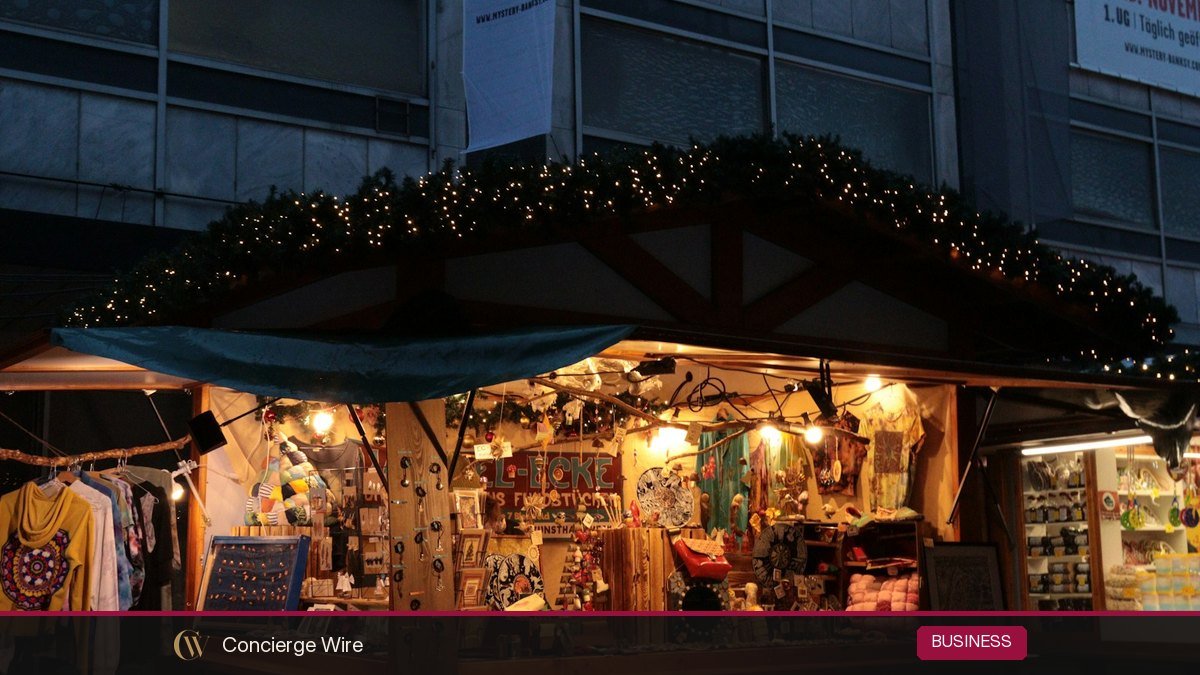
To run a holiday pop-up shop or market booth, you need four things lined up before the first customer walks in: the right event, the permits and sales tax registration your state requires, a booth that sells from ten feet away, and a payment setup that works even when the Wi-Fi does not. This guide covers each step, with a booth-fee breakeven example, a permits table and a packing checklist you can print.
Key Takeaways
- Judge an event by its likely buyers, not just its foot traffic. Ask organizers for past attendance, vendor mix and whether vendors sold out last year.
- In most states you must collect sales tax at in-person events. California, for example, issues temporary seller’s permits for selling locations open fewer than 90 days.
- Work out your breakeven before you pay the booth fee: fee plus costs, divided by your profit per sale.
- Bring a card reader that can take payments offline, plus a cash float, and set your sales tax rate in the POS before the event.
- Collect emails or SMS sign-ups at the booth. The customer list is worth more than one weekend of sales.
Step 1: Find the right holiday market or pop-up spot
The holiday season brings dozens of selling options in most metro areas, from big ticketed craft fairs to a corner of a friendly coffee shop. Good places to look:
- City and downtown associations. Many run holiday markets or Small Business Saturday events. Small Business Saturday falls on November 28, 2026.
- Chambers of commerce and local business networks.
- Makers’ markets and craft fair organizers, which often accept applications months ahead but sometimes have late cancellations.
- Breweries, wineries and cafes that host weekend vendor days.
- Schools, churches and community centers running holiday bazaars.
- Short-term retail spaces: empty storefronts that landlords rent by the week or month, sometimes shared among several vendors.
- Event listing sites and local social media groups, where organizers post “vendors wanted” calls.
Questions to ask before you apply
| Question | Why it matters |
|---|---|
| What was attendance last year, and who comes? | A crowd of families on a free outing buys differently from a ticketed shopping event |
| How many vendors sell products like mine? | Three candle makers in one aisle split the same buyers |
| What is the booth fee, and is there a commission on sales? | Some events charge both |
| What size is the space, and is it indoors or outdoors? | Affects tent, weights, lighting and heaters |
| Is electricity or Wi-Fi available? | Lighting, card readers, phone charging |
| Do you require liability insurance or a certificate naming the organizer? | Common for larger markets and city-run events |
| Do you collect sales tax info or permits from vendors? | Tells you what paperwork to have ready |
| How will the event be promoted? | Ads, local press and vendor shares drive turnout |
| What are load-in and load-out times? | Some markets lock doors to vehicles at set times |
| What is the cancellation and weather policy? | Outdoor events can be canceled with little notice |
If you can, visit the event or a similar one by the same organizer as a shopper first. Watch which booths have lines and what they price at.
Step 2: Permits, licenses and sales tax
This is the part most first-time vendors skip, and it is the part that can lead to a bill later. Rules depend on your state, county and city, so treat the table below as a checklist of questions, not legal advice. The SBA’s guide to applying for licenses and permits is a good starting point for figuring out what applies to you.
| What you may need | Who issues it | Notes |
|---|---|---|
| Seller’s permit or sales tax registration | State tax agency | Needed in most states to collect sales tax on taxable goods; some states offer temporary permits for events |
| Local business license | City or county | Some cities require a license even for a single weekend; others exempt event vendors |
| Temporary vendor or special event permit | City, or handled by the event organizer | Ask the organizer what they cover |
| Food or health permit | County or local health department | Required for most food and drink; cottage food rules vary widely by state |
| Liability insurance certificate | Your insurer | Often required by organizers; short-term event policies exist |
| Fire approval for tents, heaters or candles | Local fire marshal or organizer | Many indoor venues ban open flames |
Example: how California handles temporary sellers
California is a useful example because its rules are clearly published. According to the California Department of Tax and Fee Administration, a temporary seller’s permit is for sellers at a location for less than 90 days, and each temporary location has to be registered separately. A business that already holds a regular seller’s permit registers its temporary locations under that permit instead of getting a separate temporary permit. Vendors at swap meets, flea markets and special events also give the event operator a completed form (CDTFA-410-D), which is how the state tracks who sold at each event.
Other states do it differently. Some issue event or temporary permits, some expect you to register as a regular retailer, and a few have no statewide sales tax at all. Check your state tax agency’s site, and if you are crossing state lines for a market, check that state’s rules too.
Sales tax at the booth
- Find the right rate. Sales tax at an event is usually based on where the event takes place, which may differ from your home rate.
- Decide: tax-included or added at checkout. Tax-included round prices ($20, $35) speed up cash sales, but you still owe the tax out of that amount. Some states have rules about how tax-included pricing must be shown, so check before you choose.
- Record every sale. Your POS report is your sales tax record. Log cash sales too.
- File on time. Temporary permits often come with their own filing deadline shortly after the event.
Step 3: Price for the booth, not just the product
A booth fee is a fixed cost. Work out how many sales cover it before you sign up. Use the profit margin calculator to check your margin per item first.
A worked breakeven example
For illustration, imagine a candle maker considering a two-day holiday market:
| Item | Amount |
|---|---|
| Booth fee (2 days) | $250 |
| Event insurance, signage, bags, parking | $100 |
| Total fixed cost | $350 |
| Average sale price | $28 |
| Cost of goods per sale (materials, packaging) | $9 |
| Card processing (roughly 3% of the sale) | $0.84 |
| Profit per sale before fixed costs | about $18 |
| Breakeven | $350 / $18 = about 20 sales |
Twenty sales over two days is about 10 a day, or roughly one an hour over a 9-hour day. That is achievable at a busy market and risky at a quiet one. If the organizer cannot tell you attendance, assume the lower end.
Pricing tips that work at markets
- Use round numbers. $15, $25 and $40 make mental math and change-making easy.
- Offer a price ladder. Have an impulse item under $15, a core item at $25 to $40 and a showpiece or gift set above that.
- Bundle for gifts. “Any 3 for $60” or a ready-wrapped gift set raises the average sale and suits holiday shoppers.
- Do not undercut your own website. Market-only bundles are fine, but slashing prices trains customers to wait for events.
- Display every price. Many shoppers walk away rather than ask.
Step 4: Set up a booth that sells
A typical market space is 10 by 10 feet, but confirm yours. Design it to be understood from the aisle in three seconds: what you sell, roughly what it costs and that you take cards.
Layout
- Open the front. A U-shape or L-shape of tables invites people in. A single table across the front creates a barrier.
- Add height. Risers, crates and shelves bring products closer to eye level. Flat tables look like a yard sale.
- Put best sellers at the front corner that faces the main flow of foot traffic.
- Leave room to stand. If three shoppers cannot fit inside, people will not stop.
Signs and lighting
- A clear banner with your business name and what you make, high enough to be seen over a crowd.
- Price cards on every product group.
- A “We take cards” sign and a QR code to your shop or sign-up page.
- Battery or plug-in lights. Indoor halls are often dim, and outdoor markets get dark early in December.
Outdoor markets
Many outdoor markets require tent weights on every leg, a tent that meets fire rules and sides for wind. Ask the organizer for their exact requirements. Bring layers, hand warmers and something to keep stock dry.
Step 5: Payments and POS
Card payments are now expected at most markets, and a slow or failed payment loses sales. Before the event:
- Choose a mobile POS with a card reader that accepts tap, chip and phone wallets. Charge it and bring a backup battery.
- Test offline mode. Many POS apps can store card payments when there is no signal and process them later. Learn how yours works and its limits.
- Load your products and prices so checkout is two taps, not typing amounts.
- Set the correct sales tax rate for the event location.
- Bring a cash float. Small bills and coins in a lockable box, kept out of sight.
- Add a QR code to your online shop for people who want to buy later or have items shipped.
- Collect contacts. Offer a small incentive to sign up for your list, with clear consent for emails or texts.
Step 6: Promote your booth before and after
- Post your booth number and a photo of new products the week before.
- Share the organizer’s posts and tag them; they often reshare vendors.
- Email local customers with “come say hi” and an exclusive market bundle.
- Take photos at the booth for social media and your website.
- Afterward, thank buyers by email and point them to your online shop for gifts they missed.
If your pop-up is a bigger moment, such as a first retail location or a multi-week holiday shop, a short local announcement can bring press attention. This guide to announcement distribution for startups explains when that makes sense.
Printable holiday market checklist
Two to four weeks before
- Application accepted and booth fee paid
- Seller’s permit or temporary permit in place; local license checked
- Insurance certificate sent to organizer if required
- Inventory planned with a target for each product
- POS set up, products loaded, offline mode tested
Pack the night before
- Tables, tablecloths (floor length hides storage), risers, shelves
- Tent, weights and sides if outdoors
- Banner, price cards, “We take cards” sign, QR code sign
- Lights, extension cord, power bank, charging cables
- Card reader, phone, backup reader if you have one
- Cash float, cash box, receipt book
- Bags, tissue, gift wrap, tape, scissors, pens
- Permit copy, insurance certificate, organizer contact
- Email sign-up sheet or tablet
- Water, snacks, warm layers, hand warmers
- Small toolkit: zip ties, clips, duct tape, wipes
After the event
- Count cash and reconcile with the POS report
- Record sales tax collected and note the filing deadline
- Note best and worst sellers and the busiest hours
- Send a thank-you email to new contacts
- Rate the event for next year: sales, effort, cost
Frequently Asked Questions
Do I need a permit to sell at a craft fair or holiday market?
Usually, yes. Most states require you to register to collect sales tax on taxable goods, and some cities require a business or vendor license. Some states, such as California, offer temporary seller’s permits for short-term locations. Check your state tax agency and city.
How much does a holiday market booth cost?
It varies widely, from small community bazaars with modest fees to large juried markets that charge several hundred dollars or more for a weekend. Some events also take a commission on sales. Always calculate your breakeven before applying.
Do I have to charge sales tax at a pop-up?
If your state taxes the goods you sell, you generally must collect sales tax at the rate for the event location. Rules on what is taxable and how to register vary by state, so check with the state tax agency.
What is the best POS for a market booth?
Look for a mobile card reader that takes tap and chip payments, works offline, lets you preload products and calculates sales tax. Test it at home before the event.
How much inventory should I bring?
Start from your breakeven and a realistic best case, then bring enough of your best sellers to avoid selling out by midday. Pack overflow stock under the table rather than crowding the display.
Do I need insurance for a pop-up shop?
Many organizers require general liability insurance, and some want to be named on the certificate. Short-term event policies are available. Even if it is not required, consider it if you have a tent, heaters or heavy displays.
Book one event this week
Pick one local market that still has spots, ask the organizer the ten questions above and run the breakeven math. If the numbers work, apply, sort your permit and start packing from the checklist. One well-run weekend teaches you more about your customers than a month of online sales.