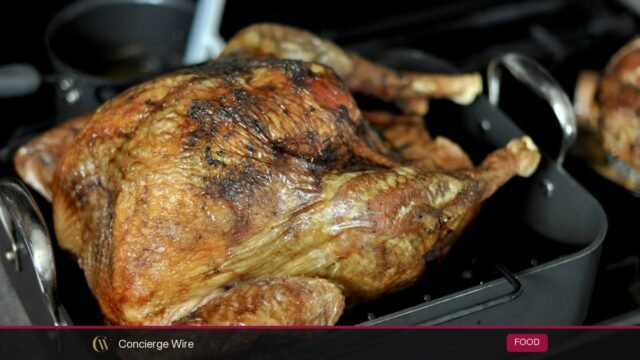
Turkey Cooking Times by Weight: Thaw, Roast, Rest (2026)
USDA-based roasting and thawing times by turkey weight, plus where to check for 165°F, how to brine and a countdown for Thanksgiving on November 26, 2026.
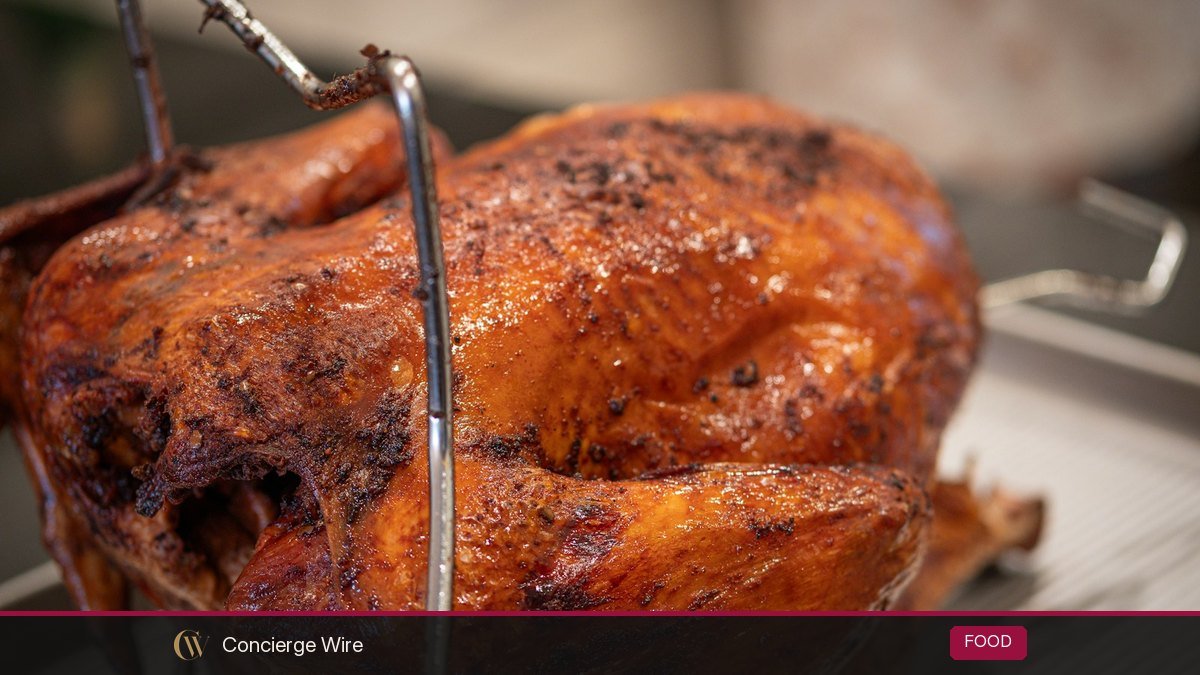
Roast a thawed turkey at 325°F and plan on roughly 2¾ to 3 hours for an 8- to 12-pound bird, 3¾ to 4¼ hours for 14 to 18 pounds, and 4½ to 5 hours for 20 to 24 pounds if it is unstuffed. Below you get the full USDA-based timetable by weight, how many days to thaw, the 165°F rule and where to put the thermometer, wet versus dry brining, and how to rest and carve so the meat stays juicy.
Key Takeaways
- Thaw in the refrigerator at about 24 hours for every 4 to 5 pounds. A 20-pound bird needs 4 to 5 days, so for Thanksgiving on Thursday, November 26, 2026, move it to the fridge by Saturday, November 21.
- Roast at no lower than 325°F. Cooking times are estimates; the turkey is done only when a food thermometer reads 165°F.
- Check three spots: the innermost part of the thigh, the innermost part of the wing and the thickest part of the breast. Stuffing must also reach 165°F in the center.
- Rest the bird 20 to 30 minutes before carving, and get leftovers into the fridge within 2 hours.
- Brining is optional. Skip it if the label says “enhanced,” “self-basting” or “kosher,” because those birds are already salted.
Quick answer (updated November 2026): At 325°F, an unstuffed 12- to 14-pound turkey takes about 3 to 3¾ hours and a 14- to 18-pound turkey about 3¾ to 4¼ hours. Add roughly 15 to 30 minutes if it is stuffed. Start checking the temperature 30 minutes before the low end of the range and pull it when the thigh, wing and breast all read 165°F.
Turkey roasting times by weight (325°F)
These times come from the USDA roasting timetable for a fresh or fully thawed turkey, as republished by University of Illinois Extension. Treat them as a planning window, not a promise. Ovens run hot or cold, a bird that is still icy inside takes longer, and a pan that is too small blocks the flow of heat.
| Turkey size | Unstuffed | Stuffed | Feeds about* |
|---|---|---|---|
| Breast, whole, 4 to 6 lb | 1½ to 2¼ hours | Not recommended | 4 to 6 |
| Breast, whole, 6 to 8 lb | 2¼ to 3¼ hours | Not recommended | 6 to 8 |
| Whole turkey, 8 to 12 lb | 2¾ to 3 hours | 3 to 3½ hours | 6 to 10 |
| Whole turkey, 12 to 14 lb | 3 to 3¾ hours | 3½ to 4 hours | 10 to 12 |
| Whole turkey, 14 to 18 lb | 3¾ to 4¼ hours | 4 to 4¼ hours | 12 to 15 |
| Whole turkey, 18 to 20 lb | 4¼ to 4½ hours | 4¼ to 4¾ hours | 15 to 18 |
| Whole turkey, 20 to 24 lb | 4½ to 5 hours | 4¾ to 5¼ hours | 18 to 22 |
*Servings use the common rule of thumb of about 1 to 1½ pounds of whole bird per person, which leaves some leftovers. It is a kitchen estimate, not a USDA figure.
How to use the table without overcooking
- Start checking early. Take the first reading 30 minutes before the low end of your range. A 16-pound unstuffed bird has a range of 3¾ to 4¼ hours, so check at about 3¼ hours.
- Tent, then uncover. Extension guidance suggests covering the bird loosely with foil and removing the tent after 1 to 1½ hours so the skin browns.
- Use a shallow pan and a rack. A pan about 2 inches deep lets hot air reach the lower half of the bird.
- Do not wash the turkey. Rinsing spreads raw-poultry juices around the sink. Pat the skin dry with paper towels instead.
How long to thaw a frozen turkey
Thawing is where most Thanksgiving plans go wrong, because people underestimate how long a big bird takes. There are three safe ways to do it: in the refrigerator, in cold water or in the microwave. Never thaw on the counter, in the garage or on the porch.
| Turkey weight | Refrigerator (24 hrs per 4 to 5 lb) | Cold water (30 min per lb) |
|---|---|---|
| 4 to 12 lb | 1 to 3 days | 2 to 6 hours |
| 12 to 16 lb | 3 to 4 days | 6 to 8 hours |
| 16 to 20 lb | 4 to 5 days | 8 to 10 hours |
| 20 to 24 lb | 5 to 6 days | 10 to 12 hours |
Refrigerator thawing (best option)
Leave the turkey in its original wrapper and set it on a tray or in a pan to catch drips. Once thawed, it can stay in the fridge for another 1 to 2 days before cooking, which gives you a buffer. A turkey thawed this way can also be refrozen if your plans change.
Cold-water thawing (the backup plan)
Seal the bird in a leak-proof bag, submerge it completely in cold tap water and change the water every 30 minutes. Cook it as soon as it is thawed and do not refreeze it. This works, but a 20-pound bird means 8 to 10 hours of water changes, so it is really a rescue method for Wednesday morning.
Microwave thawing
Only practical for small birds that fit. Follow your microwave manual for power level and minutes per pound, remove all wrapping and cook immediately afterward, because parts of the turkey may start to cook during thawing.
Forgot to thaw? You can roast it frozen
USDA guidance says a turkey can go into the oven frozen, but it takes roughly 50 percent longer than a thawed bird. Pull the giblet packet out with tongs once the cavity loosens partway through, and you cannot brine or season under the skin. It is not ideal, but it is safe.
Your Thanksgiving 2026 turkey timeline
Thanksgiving falls on Thursday, November 26, 2026. Count backward from dinner, not from the day you shop. Here is a working schedule for a 16- to 20-pound frozen turkey and a 4 p.m. meal.
- By Saturday, November 21: Move the frozen turkey to the refrigerator on a sheet pan. (For a 12- to 16-pound bird, Sunday the 22nd is fine.)
- Tuesday, November 24: Make sure fridge space is clear for brining, if you plan to brine. Buy a food thermometer if you do not own one.
- Wednesday, November 25: Check that the bird is thawed by pressing the breast and reaching into the cavity. Start a dry brine now, or a wet brine the night before roasting. Remove the neck and giblet bag.
- Thursday, about 10:30 a.m.: Take the turkey out of the fridge, preheat the oven to 325°F and pat the skin dry.
- About 11 a.m.: Turkey goes in. A 16- to 18-pound unstuffed bird should be close to done between 2:45 and 3:15 p.m.
- About 2:15 p.m.: First thermometer check.
- Out of the oven: Rest 20 to 30 minutes, which frees the oven for stuffing, rolls and casseroles.
- 4 p.m.: Carve and serve.
If you are buying a fresh turkey instead, buy it only 1 or 2 days before cooking and keep it refrigerated. Avoid fresh pre-stuffed turkeys from the store; bacteria in the stuffing can multiply if they are not handled perfectly.
Safe internal temperature: 165°F, in three places
A whole turkey and turkey parts are safe once they reach a minimum internal temperature of 165°F, measured with a food thermometer. Color and clear juices are not reliable signs. You may cook dark meat a bit higher for texture, and many cooks like the thighs at 170°F to 175°F, but 165°F is the safety line.
- Innermost part of the thigh: Push the probe in near the body, aiming toward the thickest part, and stay off the bone.
- Innermost part of the wing: Check where the wing joins the body.
- Thickest part of the breast: Insert from the neck end, parallel to the bone.
You may still see older printed guides that say 180°F for a whole bird. The current USDA standard is 165°F. If your turkey came with a pop-up timer, double-check with a real thermometer anyway; those timers are a convenience, not a guarantee.
If you stuff the bird
The USDA recommends cooking stuffing in a casserole dish for more even results. If you stuff anyway, mix the stuffing right before it goes in, pack it loosely (about ½ to ¾ cup per pound of turkey) and check the center of the stuffing with your thermometer. It must reach 165°F. Because stuffing keeps rising a few degrees during the rest, check again after resting and return the bird to the oven if the center is still short.
Wet brine vs. dry brine: which is worth it?
Brining seasons the meat all the way through and helps it hold moisture. You do not have to brine, and you should not brine a turkey that is already salted. Check the label for “enhanced,” “self-basting,” “basted,” “injected with a solution” or “kosher.” Kosher turkeys are salted during processing.
| Wet brine | Dry brine | |
|---|---|---|
| What it is | Bird soaks in salt water, often with sugar and herbs | Salt (plus optional herbs) rubbed over the skin and under it |
| Time | About 6 to 8 hours for a full-strength brine | Usually 1 to 3 days in the fridge |
| Space needed | Large pot, bucket or cooler that holds the bird and liquid | Just a sheet pan in the fridge |
| Skin | Can turn out softer unless dried well afterward | Tends to brown and crisp better |
| Gravy | Drippings can be salty | Drippings can also be salty; taste before adding salt |
| Best for | 12- to 14-pound birds that fit your container | Any size, and anyone short on fridge space |
A tested wet brine
Illinois Extension’s brine method uses 4 cups of kosher salt (or 2 cups of table salt) and 1 cup of sugar dissolved in 2 gallons of cold water, with the turkey submerged breast-down for 6 to 8 hours. For an overnight soak, cut the salt and sugar in half. The key safety point: the bird and brine must stay at 40°F or below the whole time, so brine in the refrigerator or in a cooler packed with ice packs. Afterward, rinse, pat dry, and if you have time, leave the turkey uncovered in the fridge overnight so the skin dries out and crisps in the oven.
A simple dry brine
Many cooks use roughly 1 tablespoon of kosher salt for every 4 to 5 pounds of turkey, but salt brands differ a lot in how salty a spoonful is, so go lighter with fine table salt. Rub it evenly over the skin and under the breast skin, set the bird on a rack over a sheet pan and refrigerate it uncovered for 1 to 3 days. Do not rinse before roasting. Just pat dry.
Resting and carving
Let the cooked turkey rest 20 to 30 minutes before you carve it. The juices redistribute, the meat firms up and slices hold together. Tent it loosely with foil if your kitchen is cold, but do not wrap it tightly or the skin will steam.
The Illinois Extension carving guide boils it down to cutting at the joints, never through bone. Here is the order that works:
- Legs and thighs first. Cut through the skin between leg and body, press the leg down until the hip joint shows, then cut through the joint.
- Separate drumstick and thigh at the joint. Slice the thigh meat off the bone; leave the drumstick whole or slice parallel to the bone.
- Breast. Slice down along one side of the breastbone, then make a horizontal cut at the base so the whole breast lobe comes off in one piece. Slice it across the grain on a cutting board. Repeat on the other side.
- Wings. Cut at the joint where the wing meets the body and split at the middle joint.
- Save the carcass for stock. It makes the base for soup later in the week.
Carving the breast off whole and slicing it on a board gives neater, juicier slices than shaving thin pieces off the bird at the table.
Leftovers and food safety after dinner
Throw away turkey, stuffing and gravy that sit at room temperature longer than 2 hours (1 hour if it is above 90°F). Carve leftover meat off the bone, divide it into shallow containers and refrigerate. Use refrigerated turkey and stuffing within 3 to 4 days and gravy within 1 to 2 days, or freeze portions for later. Reheat everything to 165°F.
If something goes wrong mid-cook, the USDA Meat and Poultry Hotline is 1-888-674-6854.
Common turkey mistakes and quick fixes
| Problem | Likely cause | Fix |
|---|---|---|
| Still frozen Wednesday night | Moved to fridge too late | Switch to cold-water thawing, changing water every 30 minutes |
| Breast done, thighs not | Breast exposed to more heat | Shield the breast with foil and keep roasting until thighs hit 165°F |
| Skin pale | Foil left on too long or bird was wet | Remove the tent for the last hour; pat dry before roasting next time |
| Way ahead of schedule | Oven runs hot or bird was smaller than planned | Rest longer, tented; a big turkey stays warm for 45 minutes or more |
| Way behind schedule | Bird partly frozen or oven runs cool | Carve off the legs and roast them separately to finish faster |
| Salty gravy | Brined bird | Use low-sodium stock and taste before adding any salt |
Frequently Asked Questions
How long does it take to cook a 20-pound turkey?
At 325°F, an unstuffed 18- to 20-pound turkey takes about 4¼ to 4½ hours and a 20- to 24-pound bird about 4½ to 5 hours. Stuffed, plan on 4¼ to 4¾ hours for 18 to 20 pounds. Start checking with a thermometer around 30 minutes before the low end.
Do I cook a turkey at 325°F or 350°F?
USDA timetables assume 325°F, and guidance says not to set the oven any lower. Some recipes roast at 350°F or start hotter to brown the skin, which shortens the time. Whatever you choose, doneness is decided by the 165°F reading, not the clock.
Should the turkey be covered while roasting?
A loose foil tent for the first 1 to 1½ hours helps prevent the breast from overbrowning. Remove it after that so the skin can crisp. You can put foil back over just the breast if it is getting too dark.
How long can a thawed turkey stay in the fridge?
A turkey thawed in the refrigerator can stay there for 1 to 2 more days before cooking. Turkeys thawed in cold water or the microwave should be cooked right away.
Is it safe to cook a turkey overnight at a low temperature?
No. Food safety guidance says not to roast below 325°F, because the meat spends too long in the temperature range where bacteria grow.
How much turkey do I need per person?
A common planning rule is 1 to 1½ pounds of whole turkey per guest. Go toward 1½ pounds if you want leftovers or have big eaters, and consider a bone-in breast for small groups.
Before you preheat
Write three times on a sticky note and put it on the oven: when the turkey goes in, when you take the first temperature reading and when dinner is served. Then trust the thermometer over the timetable. If the thigh, wing and breast all read 165°F and the bird has rested 20 minutes, you are ready to carve, whatever the clock says.