Hanukkah 2026: Dates, Candle-Lighting Order and Traditions
Hanukkah 2026 begins at sundown on Friday, December 4. Here is the night-by-night lighting schedule, the correct candle order, foods, games and greetings.
Hanukkah 2026 begins at sundown on Friday, December 4, and ends at nightfall on Saturday, December 12, with the first candle lit on the evening of December 4 and the eighth and final candle lit on Friday, December 11. Below you will find a night-by-night lighting table, the correct candle order, the blessings, the classic foods and games, and practical advice on respectful greetings at work and in business.
Updated October 2026. Dates checked against the Hebcal Jewish calendar.
Key Takeaways
- Hanukkah 2026 runs from sundown Friday, December 4, to nightfall Saturday, December 12 (25 Kislev to 2 Tevet 5787).
- Two Friday nights fall inside the holiday this year (December 4 and 11), so menorah candles are lit before sundown and before the Shabbat candles on both.
- Candles go into the menorah from right to left, but you light the newest one, on the left, first.
- Three blessings are said on the first night and two on every other night.
- “Happy Hanukkah” and “Chag Sameach” are both safe, friendly greetings.
Hanukkah 2026 Quick Answer
| Question | Answer |
|---|---|
| When does Hanukkah 2026 start? | Sundown, Friday, December 4, 2026 |
| When does it end? | Nightfall, Saturday, December 12, 2026 |
| First candle | Evening of Friday, December 4 (before sundown, as it is Shabbat eve) |
| Last (eighth) candle | Evening of Friday, December 11 (before sundown) |
| Hebrew dates | 25 Kislev to 2 Tevet, 5787 |
| How many nights? | Eight |
| Is it a federal holiday? | No. Schools and businesses generally operate as usual. |
Jewish holidays begin at sundown, which is why Hanukkah “starts” on the evening before the first full day. The Hebcal listing for Chanukah 2026 gives these dates and lets you look up exact candle-lighting times for your ZIP code.
Night-by-Night Candle-Lighting Schedule for 2026
The timing changes on Friday and Saturday because of Shabbat. On Friday, Shabbat begins at sundown, and lighting a flame is avoided once it starts, so the menorah is lit first, while it is still light. On Saturday night, the menorah is lit only after Shabbat has ended.
| Night | Date (evening) | Candles (plus shamash) | When to light |
|---|---|---|---|
| 1 | Friday, December 4 | 1 | Before sundown, then light Shabbat candles |
| 2 | Saturday, December 5 | 2 | After nightfall, once Shabbat ends |
| 3 | Sunday, December 6 | 3 | After sundown |
| 4 | Monday, December 7 | 4 | After sundown |
| 5 | Tuesday, December 8 | 5 | After sundown |
| 6 | Wednesday, December 9 | 6 | After sundown |
| 7 | Thursday, December 10 | 7 | After sundown |
| 8 | Friday, December 11 | 8 | Before sundown, then light Shabbat candles |
Saturday, December 12, is the eighth and final day. No new candles are lit that evening; the holiday ends at nightfall. Friday, December 11, is also Rosh Chodesh Tevet, the start of the Hebrew month of Tevet, so some synagogues add special prayers that day.
On Friday nights, families usually use larger candles or more oil so the lights keep burning for at least half an hour after dark. Customs differ on exact timing, so if you are unsure, check your local candle-lighting time or ask your rabbi.
How to Light the Menorah: The Correct Order
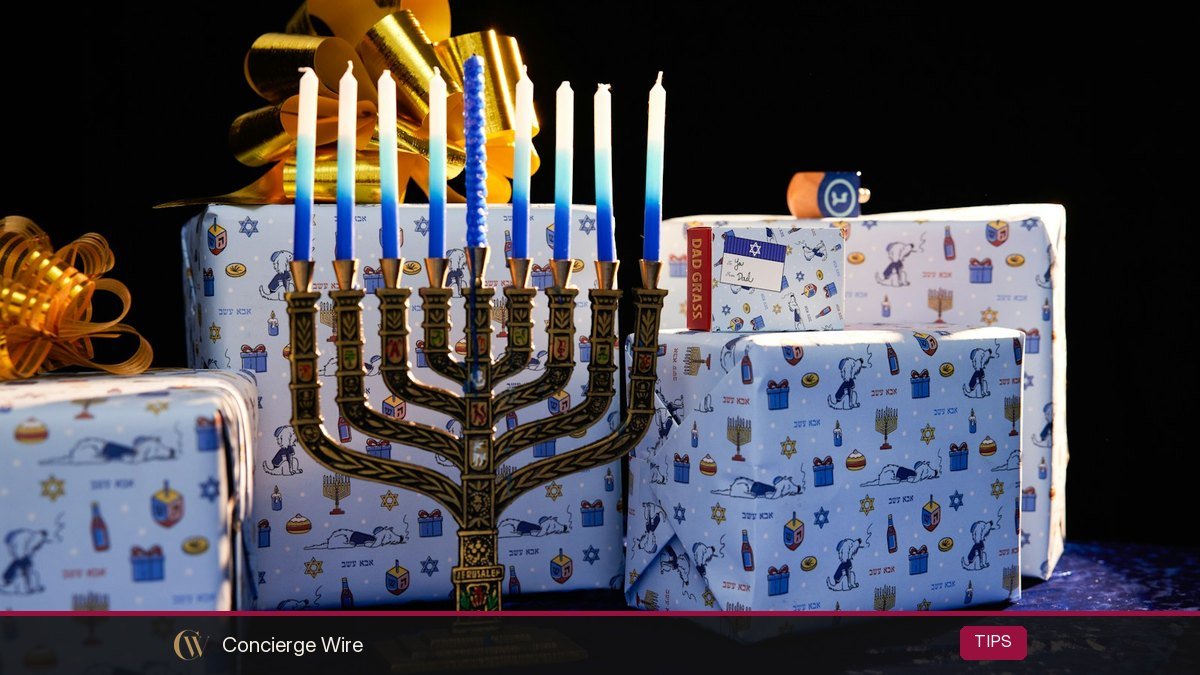
The Hanukkah menorah, also called a hanukkiah, has nine branches: eight for the nights of the holiday and one for the shamash, the “helper” candle used to light the others. The shamash usually sits higher, lower or apart from the other eight so it is easy to tell apart.
Step by step
- Place the candles from right to left. On night one, put a single candle in the far-right holder. Each night, add the new candle to the left of the previous night’s.
- Set the shamash in its own spot.
- Say the blessings after the candles are in place but before lighting.
- Light the shamash first (the common Ashkenazi practice).
- Use the shamash to light the candles from left to right. That means the newest candle, the leftmost one, is always lit first.
- Return the shamash to its holder and let the candles burn down.
According to My Jewish Learning’s candle-lighting guide, Sephardi practice differs slightly: an extra candle is used to light the night candles, and the shamash is lit last. The same guide notes that one menorah needs 44 candles over eight nights, which is why most boxes hold 45, giving you one spare.
The blessings
Three blessings are said on the first night:
- The blessing over kindling the Hanukkah lights.
- The blessing thanking God for the miracles performed for our ancestors “in those days, at this season.”
- The Shehecheyanu, a blessing for reaching this time of year.
From the second night on, only the first two blessings are said. Many families follow the lighting with songs such as “Maoz Tzur” (“Rock of Ages”) or “Hanerot Halalu.”
Where to place the menorah
Tradition is to display the menorah where others can see it, often in a window facing the street, to share the story of the holiday. Use a sturdy, heat-resistant surface, keep it away from curtains and anything that can burn, and never leave lit candles unattended. The Consumer Product Safety Commission’s holiday safety tips also advise keeping lit candles in sight and blowing them out before you leave a room.
The Story Behind Hanukkah
Hanukkah means “dedication” in Hebrew. The holiday recalls events in the second century BCE, when a small group of Jewish fighters, led by the Maccabee family, revolted against the Seleucid Greek rulers of Judea, who had banned Jewish practice and desecrated the Temple in Jerusalem. After the Maccabees won back the Temple, they cleaned and rededicated it.
According to the Talmud, they found only one small jar of pure olive oil, enough to keep the Temple menorah lit for a single day. The oil burned for eight days, long enough to prepare new oil. That is the origin of eight nights, of lighting lamps or candles, and of eating foods fried in oil.
Religiously, Hanukkah is considered a minor festival compared with Rosh Hashanah, Yom Kippur or Passover. Work is permitted on all eight days. Its prominence in the United States owes a lot to its timing near Christmas, but it has its own history and meaning, and it is not “Jewish Christmas.”
Traditional Hanukkah Foods
Because the miracle centers on oil, fried food is the star of the Hanukkah table.
| Food | What it is | Notes |
|---|---|---|
| Latkes | Shredded potato pancakes fried in oil | Served with applesauce or sour cream; a long-running friendly debate |
| Sufganiyot | Jelly-filled doughnuts dusted with powdered sugar | Especially popular in Israel |
| Bimuelos | Fried dough puffs, often drizzled with honey or syrup | A Sephardi tradition |
| Brisket | Slow-braised beef | A common main dish at family dinners |
| Cheese dishes | Cheese latkes, blintzes, rugelach | Some families eat dairy to honor the story of Judith |
| Chocolate gelt | Foil-wrapped chocolate coins | Given to children and used as dreidel stakes |
Tips for crisp latkes at home
- Squeeze as much liquid out of the grated potato and onion as you can, using a clean kitchen towel.
- Keep the oil hot, around a quarter inch deep, and don’t crowd the pan.
- Drain on a rack, not paper towels, so the bottoms stay crisp.
- Hold finished latkes in a low oven rather than stacking them.
Dreidel, Gelt and Other Traditions
How to play dreidel
The dreidel is a four-sided spinning top. Each side carries a Hebrew letter: nun, gimel, hei and shin. Together they stand for “Nes gadol haya sham,” “A great miracle happened there.” Dreidels sold in Israel replace shin with pe, for “po,” meaning “here.”
Everyone starts with the same number of tokens (gelt, nuts or candy) and puts one in the pot. Players take turns spinning:
- Nun: nothing happens.
- Gimel: take the whole pot.
- Hei: take half the pot.
- Shin (or pe): put one token in.
When the pot is empty, everyone adds one more. The game ends when one person has everything, or when the latkes are ready.
Gelt and gifts
Gelt, Yiddish for money, began as real coins given to children and teachers. Chocolate gelt is the modern version. Gift-giving each night is a common American custom, though many families keep it modest or dedicate one night to giving to charity, known as tzedakah.
Public menorah lightings
Many U.S. cities and towns hold public menorah lightings, often organized by local synagogues or Jewish community centers. Check community calendars in late November for events near you.
Respectful Hanukkah Greetings and Workplace Tips
What to say
- “Happy Hanukkah” is always appropriate.
- “Chag Sameach” (khag sah-MAY-akh) means “happy holiday” and works for most Jewish festivals.
- “Hanukkah Sameach” means “happy Hanukkah” in Hebrew.
- “Happy holidays” is fine in mixed company if you don’t know what someone celebrates.
Spelling varies because the name is transliterated from Hebrew. Hanukkah and Chanukah are the most common; both are correct.
For employers and small businesses
- Don’t assume time off is needed. Hanukkah does not restrict work. Some employees may ask to leave early on a night with a family gathering; treat it like any reasonable request.
- Watch Friday scheduling. With two Friday nights inside the holiday this year, observant employees may already be leaving before sundown for Shabbat.
- Keep holiday decor inclusive if you decorate for Christmas. A menorah display is a kind gesture if you have Jewish staff or customers, but avoid using it as a marketing prop.
- Get the dates right in any promotion. “Eight nights of deals” campaigns should start on December 4, not on the first full day.
- Office parties: label food clearly. Some guests keep kosher and will appreciate knowing what’s in each dish.
- Don’t frame it as the Jewish version of Christmas. Describe it as what it is: a festival of lights marking the rededication of the Temple.
Hanukkah Dates for the Next Few Years
Hanukkah follows the Hebrew calendar, which is lunar-based with leap months, so its Gregorian dates move from year to year, anywhere from late November to late December. Hebcal lists the following dates (the holiday begins at sundown on the evening before the first full day):
| Year | First candle (evening) | Holiday ends (nightfall) |
|---|---|---|
| 2026 | Friday, December 4 | Saturday, December 12 |
| 2027 | Friday, December 24 | Saturday, January 1, 2028 |
| 2028 | Tuesday, December 12 | Wednesday, December 20 |
| 2029 | Saturday, December 1 | Sunday, December 9 |
Notice 2027: Hanukkah begins on Christmas Eve and runs through New Year’s Day. If you run a business with holiday promotions or staff schedules, that overlap is worth planning for a year in advance. In 2029, the first candle falls on a Saturday night, so it will be lit only after Shabbat ends.
Before planning events for future years, double-check an up-to-date Jewish calendar such as Hebcal, which also lists local candle-lighting times.
Frequently Asked Questions
What day does Hanukkah start in 2026?
Hanukkah 2026 begins at sundown on Friday, December 4. The first candle is lit that evening, before Shabbat begins. The first full day of the holiday is Saturday, December 5.
When is the last night of Hanukkah 2026?
The eighth and final candle is lit on the evening of Friday, December 11, before sundown. The holiday ends at nightfall on Saturday, December 12.
Which candle do you light first on the menorah?
You place candles from right to left but light from left to right, so the newest candle, the one farthest to the left, is lit first. The shamash, or helper candle, is used to light the others.
Why is Hanukkah eight nights?
According to Jewish tradition, when the Maccabees rededicated the Temple in Jerusalem, a single day’s supply of pure oil kept the Temple menorah burning for eight days. The eight nights of candles commemorate that miracle.
Is it okay to say “Happy Hanukkah” to someone I don’t know well?
Yes. “Happy Hanukkah” is a friendly, widely used greeting. If you are not sure whether someone celebrates, “Happy holidays” is a safe, warm alternative.
Do businesses close for Hanukkah?
Generally no. Hanukkah is not a federal holiday, and Jewish law does not prohibit work during it. Some Jewish-owned businesses may close early on Friday afternoons for Shabbat, as they do all year.
Plan Ahead for December 4
Buy candles early, since stores can run low the week before. Check your local lighting time for the two Friday nights, and if you are hosting, make the latkes ahead and reheat them in the oven so you can be at the menorah when the candles are lit. Happy Hanukkah.