Diwali 2026 in the USA: Date, Puja Times, Events and Greetings
Diwali falls on Sunday, November 8, 2026 in the US. Get the five-day dates, Lakshmi Puja times for major cities, event ideas and respectful greetings.
Diwali 2026 falls on Sunday, November 8 in the United States, with the main Lakshmi Puja that evening and the full five-day festival running from Friday, November 6 to Tuesday, November 10. This guide gives you the verified dates and evening puja times for major US cities, explains what Diwali is and how American families celebrate it, lists where to find public celebrations, and shows how to greet coworkers and customers respectfully. Updated October 2026.
Key Takeaways
- Diwali (Lakshmi Puja) is on Sunday, November 8, 2026 in the US, according to Drik Panchang’s calendars for New York and Los Angeles.
- The five days in the US: Dhanteras (Fri, Nov 6), Naraka Chaturdashi (Sat, Nov 7), Diwali (Sun, Nov 8), Govardhan Puja (Mon, Nov 9) and Bhai Dooj (Tue, Nov 10).
- Lakshmi Puja muhurat in New York is 5:04 p.m. to 6:52 p.m. local time; times differ by city because they follow local sunset.
- Diwali is celebrated by Hindus, Sikhs, Jains and some Buddhists. “Happy Diwali” is a safe, warm greeting for anyone.
- Diwali is not a federal holiday. California authorized schools and community colleges to close for it and lets state employees take the day off, starting in 2026.
When is Diwali 2026 in the USA? The quick answer
Hindu festival dates follow the lunar calendar, so they move every year and can fall on different days in India and the US. For 2026, the US dates below come from Drik Panchang, a widely used Hindu calendar reference, for New York City and Los Angeles.
| Festival day | US date 2026 | What it marks |
|---|---|---|
| Dhanteras | Friday, November 6 | First day; buying metal, utensils or gold for good fortune; cleaning the home |
| Naraka Chaturdashi (Choti Diwali) | Saturday, November 7 | Early bath ritual, lamps, preparations for the main night |
| Diwali / Lakshmi Puja | Sunday, November 8 | Main night: prayers to Goddess Lakshmi, lamps, sweets, family gatherings |
| Govardhan Puja / Annakut | Monday, November 9 | Offering of many vegetarian dishes at temples and homes |
| Bhai Dooj | Tuesday, November 10 | Celebration of the bond between brothers and sisters |
One detail to know if you have family in India: Drik Panchang lists some of the surrounding days differently for Indian cities. For example, its calendar for Indore puts Naraka Chaturdashi on Sunday, November 8 and Bhai Dooj on Wednesday, November 11, while the main Lakshmi Puja is on November 8 in both countries. Temples and families may follow their own regional calendars, so check with your local temple if you are planning a specific ritual.
Lakshmi Puja muhurat 2026 in major US cities
The muhurat is the auspicious window for the main evening prayer. It depends on local sunset, so it is different in every city. These times are from Drik Panchang’s city pages for Sunday, November 8, 2026. Daylight saving time ends on November 1, so all times are local standard time.
| City | Lakshmi Puja muhurat | Pradosh Kaal (evening period) |
|---|---|---|
| New York City | 5:04 p.m. to 6:52 p.m. EST | 4:44 p.m. to 7:31 p.m. |
| Chicago | 4:55 p.m. to 6:43 p.m. CST | 4:36 p.m. to 7:24 p.m. |
| Houston | 5:52 p.m. to 7:47 p.m. CST | 5:29 p.m. to 8:08 p.m. |
| Los Angeles | 5:16 p.m. to 7:08 p.m. PST | 4:54 p.m. to 7:35 p.m. |
For New York, Drik Panchang lists the Amavasya (new moon) tithi as beginning at 12:57 a.m. on November 8 and ending at 2:01 a.m. on November 9. If you live elsewhere, look up your own city on the same site or ask your local temple, as the windows can differ by an hour or more.
What is Diwali?
Diwali, also called Deepavali, means “row of lamps”. It is often called the festival of lights, and its core idea is the victory of light over darkness and good over evil. It is one of the most important festivals for Hindus and is also observed by Sikhs, Jains and some Buddhists, each with its own meaning:
- Hindus celebrate several stories depending on region, including Lord Rama’s return to Ayodhya after defeating Ravana, and worship Lakshmi, the goddess of prosperity, on the main night.
- Sikhs mark Bandi Chhor Divas, which commemorates the release of Guru Hargobind from imprisonment.
- Jains observe the day as the nirvana of Lord Mahavira.
- Some Buddhists, particularly Newar Buddhists from Nepal, also celebrate the festival.
Because the meaning varies, avoid assuming everyone who celebrates does so for the same reason. Asking “How do you celebrate Diwali?” is usually welcome.
How families in the US celebrate Diwali
Traditions travel with families from different parts of India and the diaspora, so you will see a lot of variety. Common elements include:
- Cleaning and decorating the home in the days before, often with new curtains, flowers and lights.
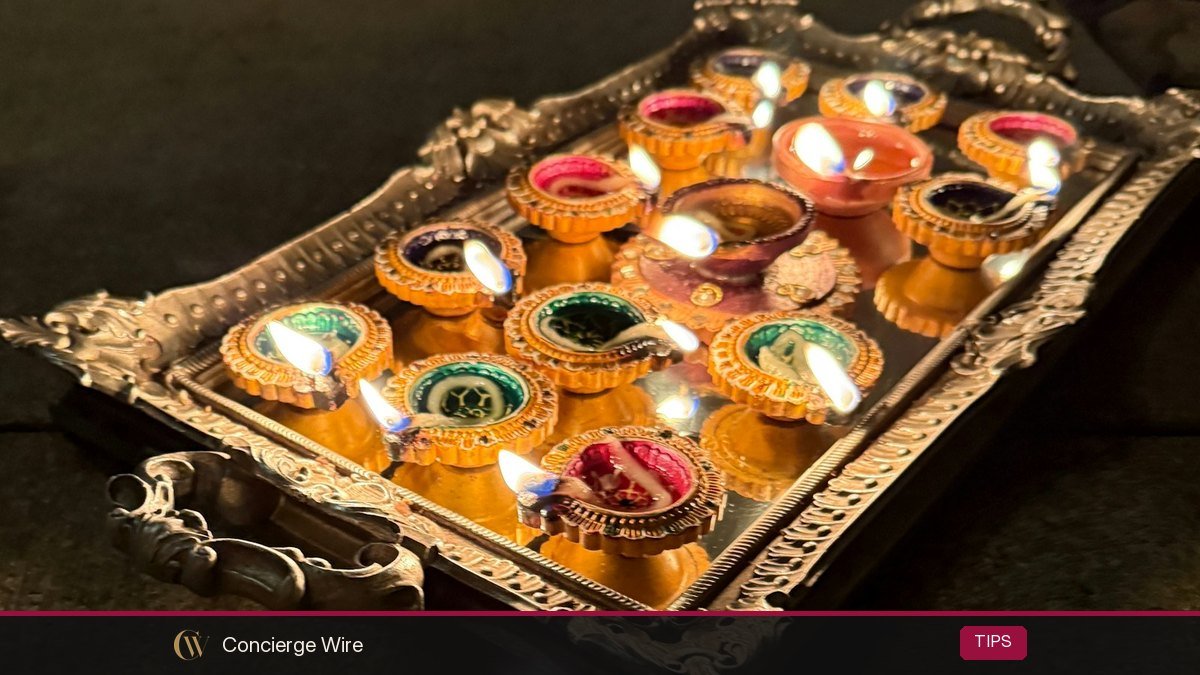
- Lighting diyas (small clay oil lamps) and candles, and stringing lights outside. Many US families use LED diyas and string lights, especially in apartments.
- Rangoli, colorful patterns made with powder, rice or flowers at the doorway to welcome guests.
- Lakshmi Puja on the main evening, at home or at a temple.
- New clothes and visits to family and friends.
- Sweets (mithai) and snacks exchanged as gifts: laddoos, barfi, kaju katli and homemade treats.
- Fireworks, where local law allows. Many US cities and states restrict consumer fireworks, so families often attend organized displays or skip them.
- Annakut the day after Diwali, when many temples prepare large displays of vegetarian food as an offering and share it with visitors.
Because Diwali falls on a Sunday in 2026, many families can celebrate on the day itself rather than shifting the gathering to a weekend.
Public Diwali events in US cities
Public celebrations are usually held on weekends around the festival, from mid-October into November. Dates change every year, so always confirm with the organizer.
- New York City: Diwali at Times Square was scheduled for Saturday, October 24, 2026, between 46th and 48th Streets on Broadway, with free admission, according to the organizer’s website. Queens neighborhoods such as Jackson Heights and Richmond Hill also see shopping, food and community celebrations in the run-up to Diwali.
- New Jersey: Oak Tree Road in Edison and Iselin, one of the largest South Asian shopping districts in the country, is busy with sweet shops and festive shopping.
- Chicago: Devon Avenue’s South Asian businesses and suburban temples host celebrations and food.
- Houston and Dallas: Large Hindu temples and community associations hold Diwali melas (fairs) and Annakut events.
- Los Angeles area: Artesia’s Little India along Pioneer Boulevard is a long-standing hub for Diwali shopping and street events.
- San Francisco Bay Area: Community groups in cities with large South Asian populations hold fairs, cultural programs and temple events.
The best way to find something near you: check the websites of local Hindu, Sikh and Jain temples, Indian community associations, your city’s events calendar, and nearby university South Asian student groups, many of which host open Diwali nights. Most temples welcome respectful visitors; remove your shoes where asked, dress modestly and follow the lead of regular attendees.
Is Diwali a holiday in the US?
Diwali is not a federal holiday, and it is not on the federal holiday schedule for 2026. However, recognition is growing at state and local levels.
- California: Governor Gavin Newsom signed AB 268 on October 7, 2025. According to the Hindu American Foundation, the law took effect January 1, 2026, authorizes K-12 schools and community colleges to close for Diwali, and allows state and school employees to take the day off.
- Other states: News coverage of the California law described it as the third state to recognize Diwali, after Pennsylvania (2024) and Connecticut (2025).
- School districts: Some districts, including New York City public schools under state law, include Diwali on their calendars. Because Diwali falls on a Sunday in 2026, check your district’s calendar to see whether any weekday is affected.
Private employers are not required to close, but most are required to reasonably accommodate religious observance, as described below.
How to greet coworkers, clients and customers
A short, sincere message is always better than an elaborate one. Here are greetings that work in US workplaces:
- “Happy Diwali! Wishing you and your family a bright and joyful festival.”
- “Wishing you a Happy Diwali and a prosperous new year ahead.” (For many Gujarati families, the day after Diwali is also the start of the new year.)
- “Shubh Deepavali!” (a traditional Hindi greeting meaning “auspicious Deepavali”)
- For Sikh colleagues: “Happy Bandi Chhor Divas” is also appropriate.
- Email to clients: “To everyone celebrating, Happy Diwali from all of us at [Company]. May the festival of lights bring you health and happiness.”
Do this, not that
| Do | Avoid |
|---|---|
| Say “Happy Diwali” warmly, by name | Calling it “Indian Christmas” or “Hindu Halloween” |
| Ask colleagues how they celebrate | Assuming everyone of South Asian heritage celebrates |
| Offer flexibility for the evening of Nov 8 and travel days | Scheduling mandatory events on festival evenings |
| Bring vegetarian sweets or dried fruit if you share food | Gifting beef products or alcohol by default |
| Use LED candles at work if you decorate | Open flames in the office |
For managers and small-business owners
The U.S. Equal Employment Opportunity Commission explains that employers must generally reasonably accommodate an employee’s religious beliefs and practices, such as time off, unless doing so would cause undue hardship. In practice, that means approving reasonable leave requests for Diwali where you can, allowing schedule swaps, and not penalizing anyone for observing. If you are a retailer or restaurant, a simple “Happy Diwali” sign or a festive special can be a welcome gesture to customers who celebrate, as long as it is respectful rather than a costume or a stereotype.
If you are invited to a Diwali gathering
Being invited to a friend’s or colleague’s home for Diwali is a sign of real warmth. A few simple points will help you feel at ease.
- What to bring: A box of Indian sweets from a local sweet shop, dry fruits, flowers, a decorative candle or a small plant are all classic gifts. If you are unsure about dietary rules, choose something vegetarian and alcohol-free.
- What to wear: Bright, festive colors are welcome. Many guests wear Indian clothing if they have it, but neat, colorful everyday clothes are perfectly fine. Avoid all-black if you can, as it is less common at celebrations.
- Shoes: Many households remove shoes at the door. Follow your host’s lead.
- The puja: If the family is doing Lakshmi Puja while you are there, you can stand quietly or join in if invited. No one expects you to know the prayers.
- Food: Expect plenty of it. Try a little of everything you can, and it is fine to decline politely.
- Fireworks and diyas: Keep children away from open flames and follow local fireworks rules.
Sending a thank-you message the next day, with a line about something you enjoyed, rounds off the visit nicely. If you want to return the gesture, inviting your hosts to a celebration from your own tradition later in the year is a thoughtful way to build the friendship.
Frequently Asked Questions
What date is Diwali 2026 in the USA?
Diwali (Lakshmi Puja) is on Sunday, November 8, 2026 in the US. The five-day festival runs from Dhanteras on Friday, November 6 to Bhai Dooj on Tuesday, November 10.
What time is Lakshmi Puja 2026 in New York?
Drik Panchang lists the New York Lakshmi Puja muhurat as 5:04 p.m. to 6:52 p.m. EST on November 8, 2026. Other cities have different times based on local sunset.
Is Diwali a federal holiday in the US?
No. Diwali is not a federal holiday. California authorized school and community college closures and time off for state employees starting in 2026, and some school districts include it on their calendars.
What do you say to someone celebrating Diwali?
“Happy Diwali” is the simplest and most common greeting. You can also say “Wishing you a bright and joyful Diwali” or the traditional “Shubh Deepavali”.
Why does the Diwali date change every year?
Diwali follows the Hindu lunar calendar and falls on the new moon (Amavasya) of the month of Kartik (called Ashvin in some regional calendars). That lands between mid-October and mid-November in the Gregorian calendar.
Who celebrates Diwali?
Hindus, Sikhs, Jains and some Buddhists, each with their own traditions and meaning. Many friends and neighbors of other faiths join in too.
Light a lamp, share a sweet, send a note
You do not need to be an expert to mark Diwali well. Put the dates in your calendar, check the evening times for your city if you celebrate, and if you don’t, send a short, warm message to the people in your life who do. A two-line “Happy Diwali” note on November 8 is remembered far longer than you might expect.